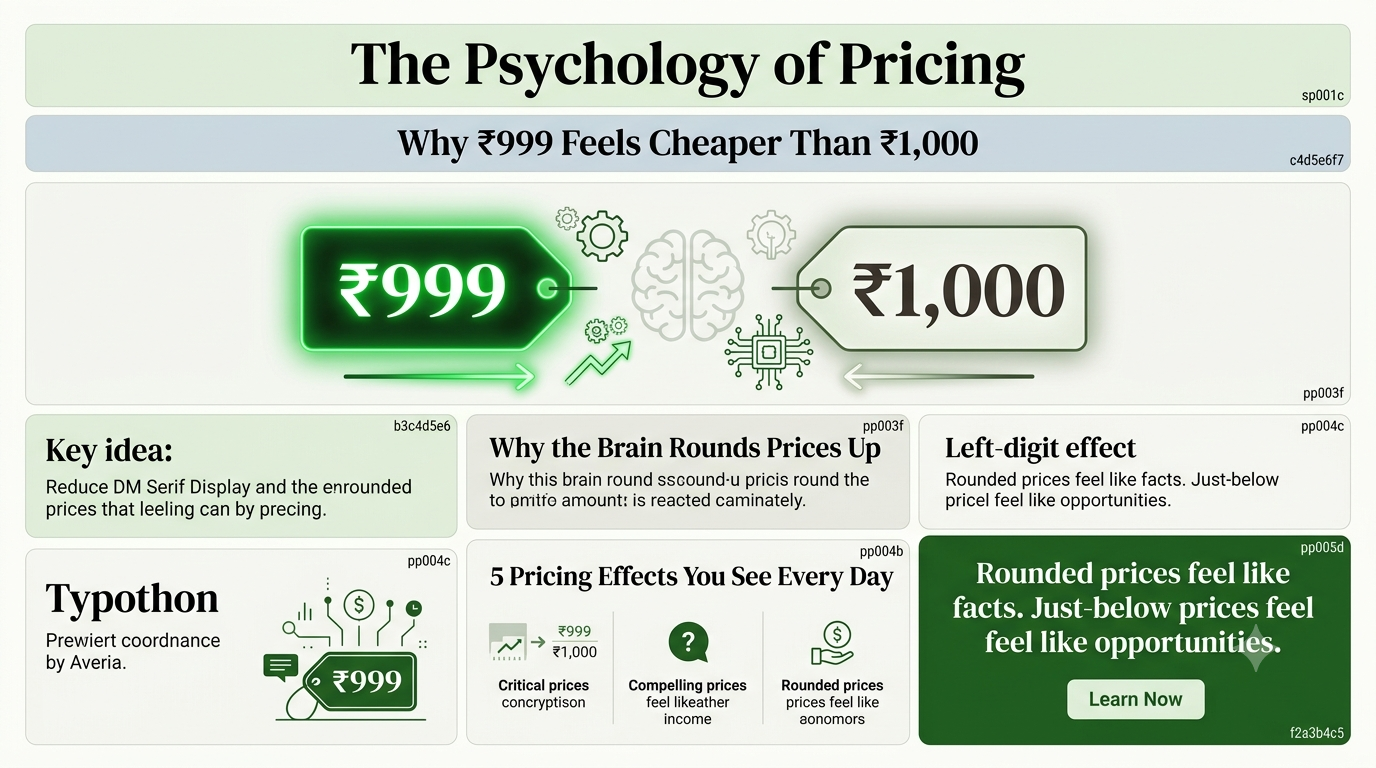
The Psychology of Pricing: Why ₹999 Feels Cheaper Than ₹1,000
8–10 min read — Digital Marketing
Look at these two prices.
₹1,000 and ₹999
Logically, the difference is just one rupee. Practically, almost nothing. And yet, most people feel that ₹999 is meaningfully cheaper.
That one-rupee gap is not a math problem. It is a psychology problem. And understanding it is one of the most useful skills in marketing, pricing, and design.
What Is the Psychology of Pricing?
The psychology of pricing is the study of how people perceive the value of a number. It is not about the actual cost, but about how that cost feels.
₹999 and ₹1,000 differ by one rupee. But they sit in different places in the mind. One feels like a three-digit number. The other feels like a four-digit one. That single digit shift changes the category of the product in the buyer’s mind.
Price is not just a number on a page. It is a story the customer tells themselves about the value of what they are about to buy.
Key idea
People do not read prices. They interpret them.
The brain processes numbers in categories, not as exact values. ₹999 and ₹1,000 are almost the same number, but they are almost the same number in different mental categories. Three digits vs. four digits. Slightly below a round number vs. exactly on it.
That is why rounding down by one digit feels like much more than one rupee.
Price is not compared to other prices. It is compared to itself—rounded up in the mind.
When we see ₹1,000, the mind anchors on the whole. When we see ₹999, the mind anchors just below it.
Why the Brain Rounds Prices Up
The brain is fast and approximate. It does not store ₹999 as nine-nine-nine. It stores it as “almost a thousand”—and then, crucially, as “not a thousand.”
Three things happen in that split second:
1. The number feels smaller. ₹999 sits in the 900s, not the 1000s.
2. The category shifts. The mind files it as slightly less than a round number.
3. The left digit dominates. The first digit sets the scale, and the rest gets compressed.
This is why charm pricing works, even when we consciously know the trick.
The 5 Pricing Effects You See Every Day
Pricing psychology is not one trick. It is a family of effects that all reduce the felt cost of buying.
1. Charm pricing. ₹999, ₹499, ₹199—slightly below a round number.
2. Left-digit effect. The first digit carries the most weight. ₹19,000 feels closer to ₹10,000 than to ₹20,000.
3. Anchor pricing. A higher price nearby makes the real price feel smaller.
4. Decoy pricing. A slightly worse option makes the target option look better.
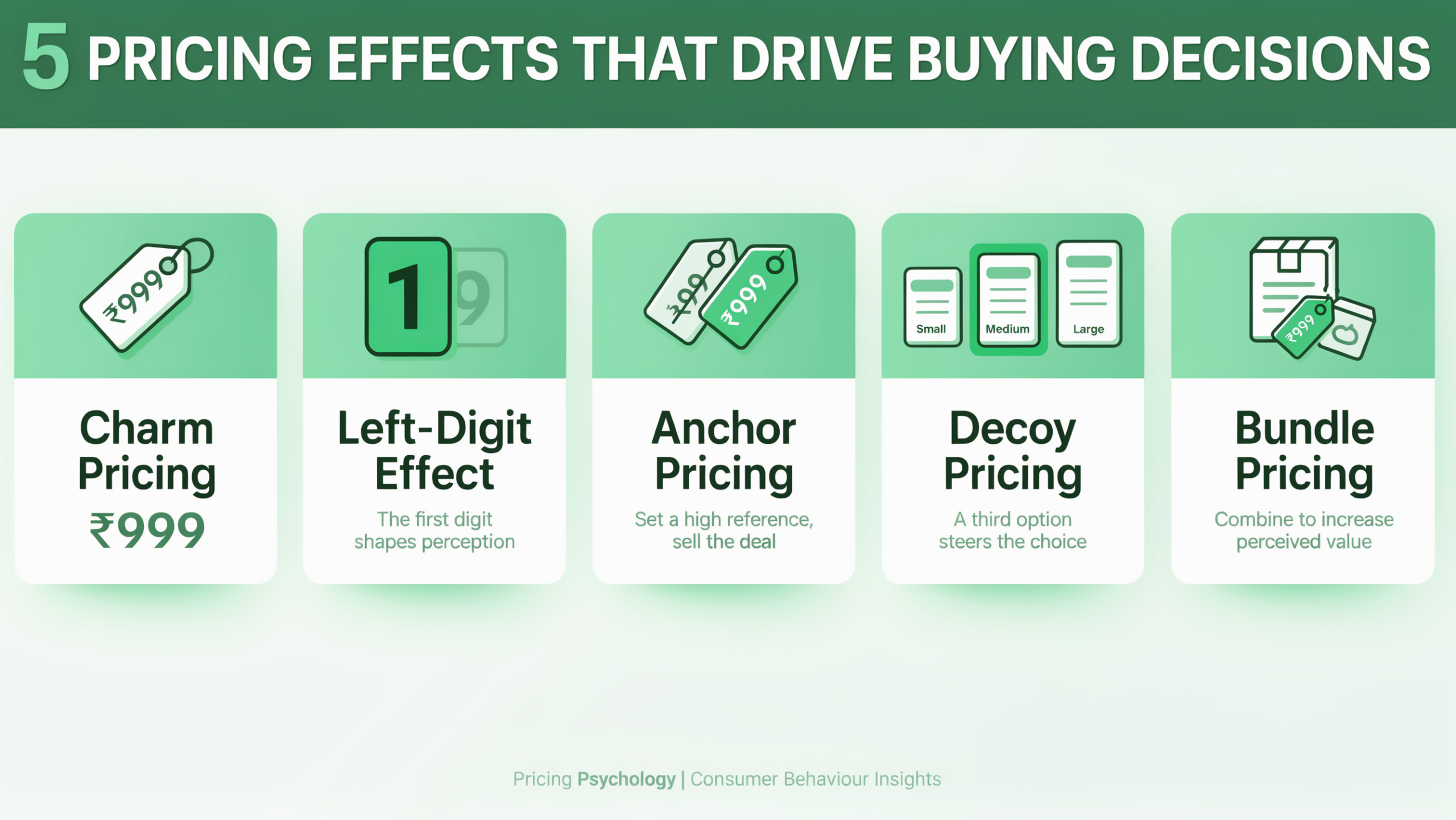
5. Bundle pricing. Grouping items so the total feels smaller than the parts.
None of these change the actual cost. What they change is how the cost is experienced—and experience is what drives the decision.
Why ₹999 Feels Like a Different Price
₹999 and ₹1,000 are functionally the same. But they are read differently.
₹1,000 is a clean number. It feels deliberate, solid, and slightly heavy—like a milestone. ₹999 feels slightly unfinished, slightly less than a whole. And that “less than” is enough to make it feel easier to buy.
The brain does not compare the two. It compares each one to its own rounded version. ₹999 rounds down to “almost 1,000.” ₹1,000 rounds up to “1,000 and beyond.”
Rounded prices feel like facts. Just-below prices feel like opportunities.
One says, “This is the price.” The other says, “This is almost the price—but not quite.”
Anchoring: The Price You Compare It To
No price exists in isolation. Every price is compared to something—even if that something is invisible or invented.
When a product shows “₹2,999” next to “₹4,999” crossed out, the higher number becomes the anchor. The real price now feels like a discount, not an expense.
When a restaurant menu shows an expensive dish first, the rest of the menu feels more affordable by comparison.
Anchor prices do not change the cost. They change the frame.
And the frame is what the buyer remembers.
Why Some Prices Feel Honest and Others Feel Cheap
Charm pricing is not always the right choice. Sometimes ₹1,000 feels more trustworthy than ₹999.
A luxury watch at ₹99,999 may feel discounted. The same watch at ₹1,00,000 may feel premium. Round, confident numbers signal certainty. Just-below numbers signal a deal.
This is why pricing is not just psychology—it is positioning.
The right price is not the smallest price. It is the one that matches the story the brand is telling.
₹999 for a mass-market app feels friendly. ₹999 for a premium consulting package feels confusing. Same number. Different meaning.
The Ethical Line: Persuasion vs. Deception
Pricing psychology becomes unethical when it hides the truth instead of clarifying it.
Crossed-out prices that were never real. Fake “was ₹4,999” labels. Hidden fees that appear only at checkout. “Discounts” that are the actual price.
Each one works once. Each one spends trust. And trust, unlike money, is hard to earn back.
The TarkWorld Principle of Honest Pricing
Use pricing psychology to make value clear, not to make truth unclear. A price should describe reality, not distract from it.
Charm pricing can be honest. Fake discounts cannot. The difference is not the number. It is the intention behind it.
Practical Pricing Tips You Can Apply Today
If you are pricing a product, these principles help without crossing ethical lines.
1. Match the price to the brand. Charm pricing suits everyday products. Round pricing suits premium ones.
2. Use anchors carefully. Show real comparisons, not invented ones.
3. Reduce mental math. Show the total cost clearly, not just the unit cost.
4. Avoid hidden fees. Surprises at checkout damage trust more than the fee itself.
5. Test, do not assume. What feels cheaper to one audience may feel cheaper to another.
Pricing is not just math. It is meaning.
The same number can feel cheap or premium, honest or suspicious, easy or heavy. The context makes the price.
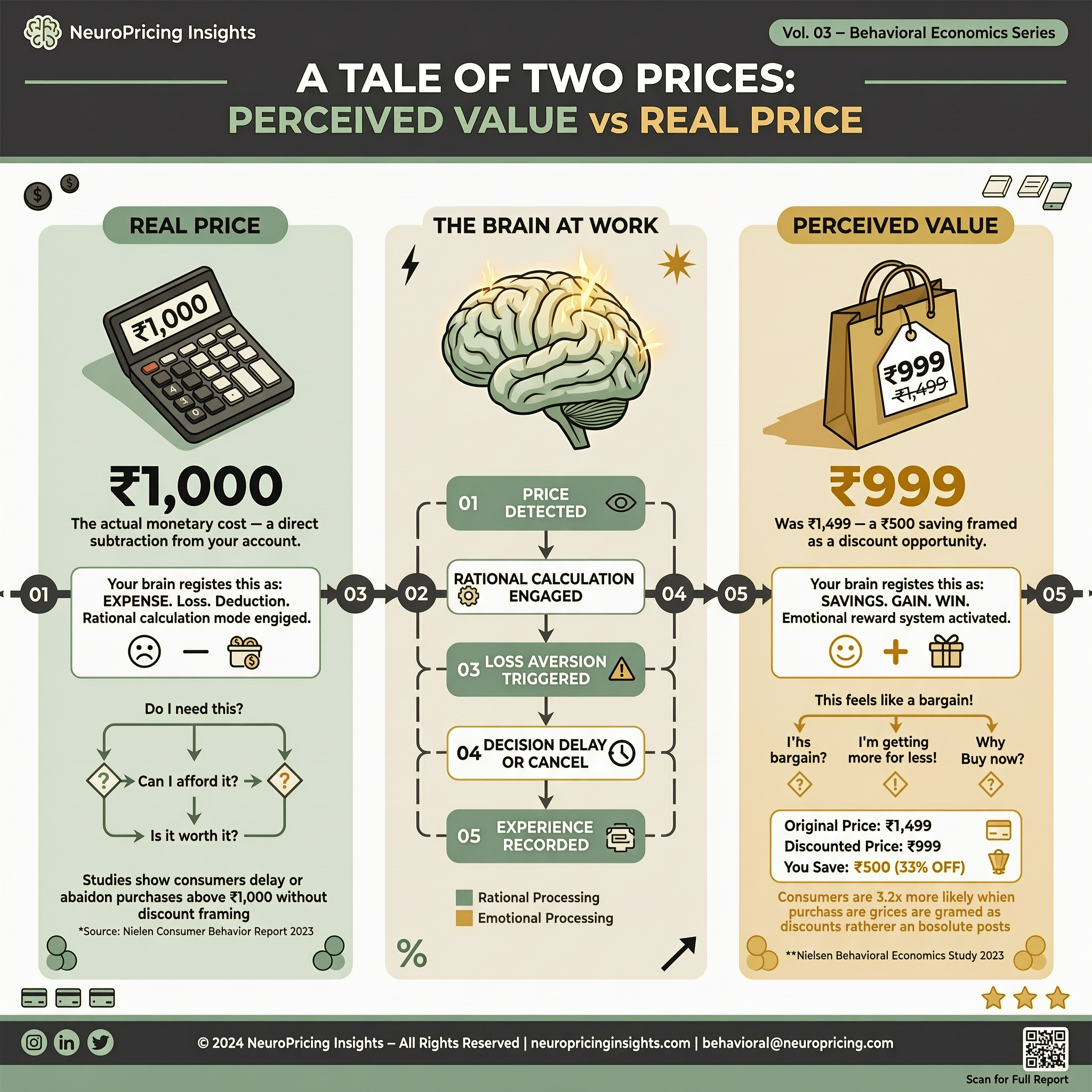
A Tale of Two Prices
Two product pages. Same item. Same quality. Different prices. Same buyer.
The number is the smallest part of the difference. The framing does the rest.
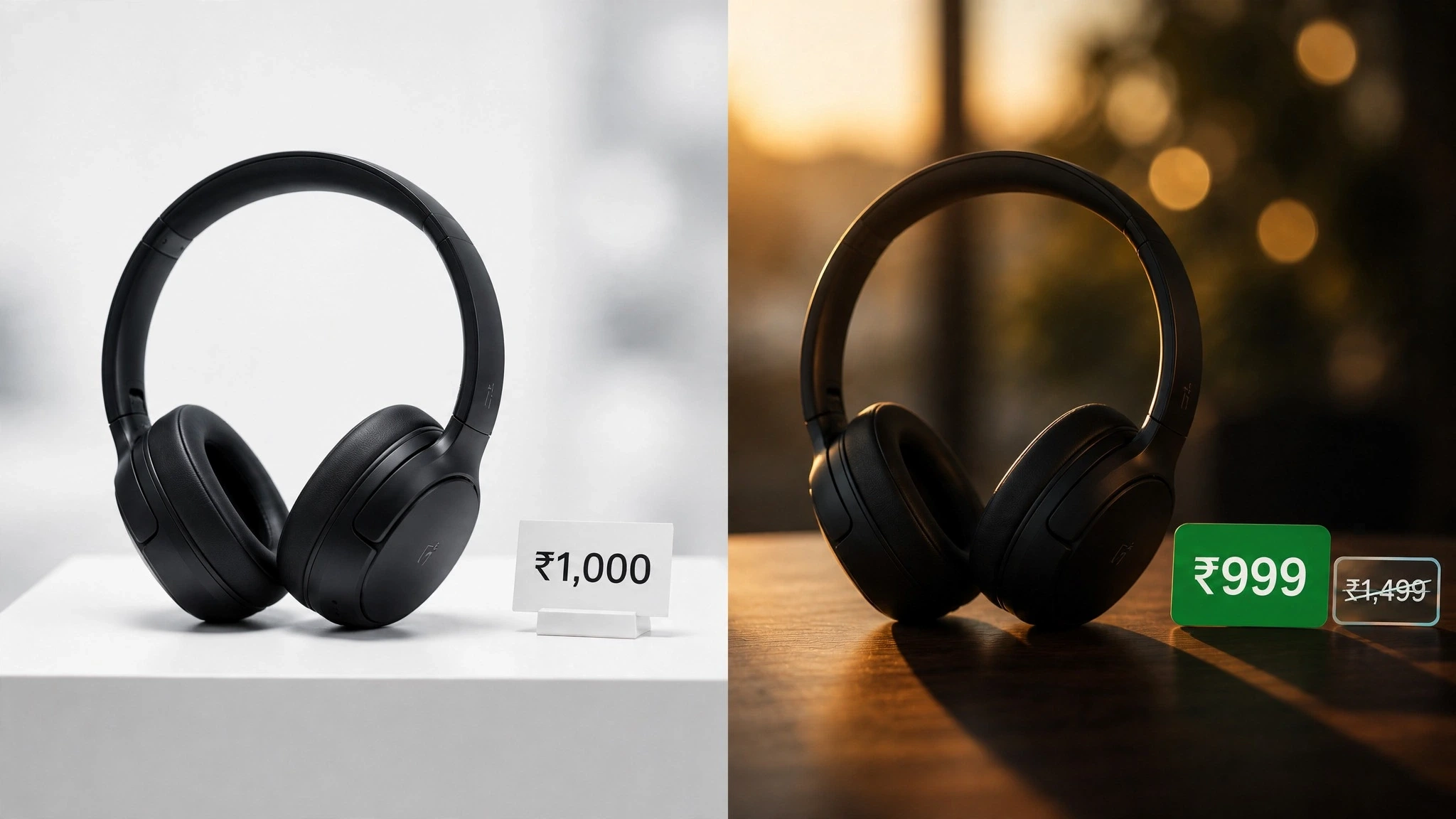
Below is a simple side-by-side. Neither is a rule. They show two ways the same price can be framed.
Price A
₹1,000 displayed as a plain number. No context, no comparison, no framing. The price stands alone and feels like a fact.
Price B
₹999 placed next to a crossed-out ₹1,499. Now the price has context. It reads as a deal, not as a cost. The buyer feels they are gaining, not spending.
HUMAN INSIGHT
People do not buy the cheapest option. They buy the option that feels the safest to justify.
A price is not just a cost—it is a story about value, quality, and status. The number is only the opening line of that story.
This is why the same product can succeed at ₹999 and fail at ₹1,000. The number is not the problem. The story around it is.
HUMAN INSIGHT
When we see ₹999, we do not compute the difference. We skip the math and jump to a feeling: that feels cheaper.
Feelings are faster than arithmetic. And in most buying decisions, they arrive first.
This is not irrationality. It is efficiency. The brain cannot carefully analyze every price it meets—so it uses shortcuts. Charm pricing is one of them.
The Bigger Lesson: Price Is Meaning, Not Just Math
₹999 and ₹1,000 are functionally the same. But they live in different parts of the mind—one in the 900s, the other in the 1000s. One feels slightly unfinished, the other fully rounded. One invites the buyer to feel smart, the other asks the buyer to accept a fact.
That tiny gap is where pricing psychology lives.
Understanding this does not make you a manipulator. It makes you someone who respects the fact that buyers are humans—not calculators.
A Final Thought for Marketers and Founders
Pricing is not a number you pick. It is a message you send.
The same price can tell a story of generosity, of quality, of urgency, or of honesty. Choosing the right one is not about being clever. It is about being clear.
Marketers who understand this stop asking, “What should we charge?” and start asking, “What should this price say?”
That is the version of pricing that builds long-term customers instead of one-time clicks.
Frequently Asked Questions
Why does ₹999 feel cheaper than ₹1,000?
Because the brain reads numbers in categories, not exact values. ₹999 sits just below a round number, so it feels like a three-digit price. ₹1,000 crosses into four digits, so it feels heavier—even though the difference is only one rupee.
Is charm pricing manipulative?
No. Charm pricing is a form of framing, not deception. It becomes manipulative when paired with fake discounts, invented anchors, or hidden fees that make the real price unclear.
Do round prices ever work better?
Yes. Round prices often signal quality, confidence, and simplicity. Luxury goods, premium services, and high-trust brands often use them because the price is meant to feel definitive, not discounted.
Does pricing psychology work in Indian markets?
Yes—and often strongly. Indian consumers are highly price-sensitive, so small framing differences like ₹999 vs. ₹1,000, or “starting at ₹499” vs. “only ₹499,” can meaningfully change how affordable a product feels.
Should small businesses use charm pricing?
Often yes—when the brand is mass-market, price-competitive, or selling through discounts. But if the brand is premium or trust-led, round prices may communicate more value than a one-rupee discount ever could.
Make value clear. Price with honesty.
Good digital communication is not about adding more information. It is about making the important information easier to notice, understand and evaluate.