The Psychology Behind “Limited Time Offer” and Scarcity
8–10 min read — Digital Marketing
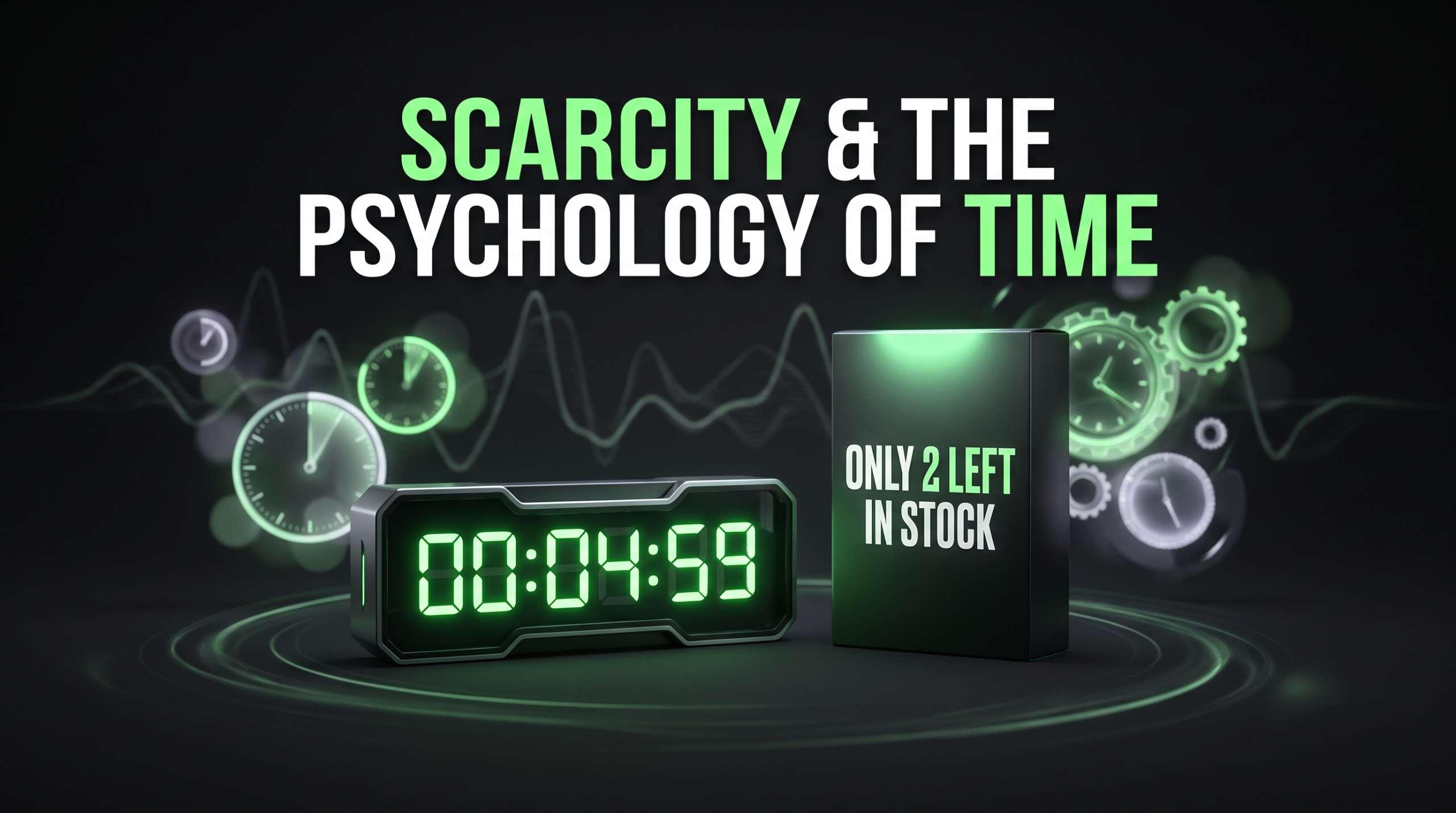
You were not planning to buy anything today. Then you saw it: “Only 2 left in stock.”
Suddenly, the thing you were casually browsing becomes urgent. Your brain shifts from maybe later to what if it disappears?
Nothing about the product changed. What changed was your sense of time—and your sense of loss.
This is the psychology of scarcity: the powerful, sometimes uncomfortable pull of things that are running out.
What Is Scarcity in Marketing?
Scarcity is the perception that something is limited. Limited in time, in quantity, or in access. When something feels scarce, it feels more valuable—and waiting feels more dangerous.
A limited-time offer uses time scarcity. A low-stock warning uses quantity scarcity. An invite-only product uses access scarcity.
Each one taps into the same instinct: if I do not act now, I might lose the chance.
Key idea
Scarcity does not make people want something more. It makes them fear losing it more.
The brain is more sensitive to loss than to gain. Missing out feels sharper than gaining something new. That is why a countdown clock can push a hesitant buyer into action—even when the product itself did not change.
The urgency is not about the product. It is about the possibility of regret.
Scarcity does not create desire. It removes delay.
For people already interested, scarcity converts hesitation into decision. For people not interested, it rarely creates interest from nothing.
Why the Brain Reacts to “Only 2 Left”
When the brain senses scarcity, three things happen at once:
1. Perceived value rises. Rare things feel more special than common ones.
2. Fear of loss increases. The pain of missing out feels worse than the effort of deciding.
3. Decision time shrinks. There is no room to postpone, so the brain acts faster.
This is why scarcity is one of the most powerful tools in marketing—and one of the easiest to misuse.
The 4 Types of Scarcity Marketers Use
Scarcity comes in different forms. Each one creates a slightly different kind of pressure.
1. Time scarcity. “Offer ends tonight.” Creates pressure through a closing window.
2. Quantity scarcity. “Only 3 left.” Creates pressure through limited supply.
3. Access scarcity. “Invite only” or “Members-only.” Creates pressure through exclusivity.
4. Opportunity scarcity. “This price will not return.” Creates pressure through a one-time chance.

Some forms feel honest. Others feel forced. The difference usually comes down to whether the limit is real.
When the limit is true, scarcity feels like information. When it is invented, it feels like pressure.
Why Deadlines Change Behavior
Without a deadline, a decision can always be made later. And “later” is where most decisions quietly die.
A deadline forces the brain to compare two options: act now or accept the loss. Once the second option has a cost, the first option becomes easier.
This is why even a soft deadline—”offer ends Sunday”—can increase conversions. It converts an open question into a closing one.
Deadlines do not create urgency. They reveal it.
If the person wanted the product, the deadline gives them permission to act. If they did not want it, the deadline does nothing.
The Two Speeds of the Brain
The brain runs on two systems. One is fast, emotional, and automatic. The other is slow, logical, and deliberate.
Scarcity speaks directly to the fast system. It bypasses careful reasoning and triggers an immediate emotional response: act before it is gone.
That is why scarcity works even when we know it is a marketing tactic. The slow brain knows. The fast brain reacts anyway.
Scarcity is not a trick. It is a shortcut to a decision that was already forming.
And that is exactly why it must be used honestly. When it is real, it helps. When it is fake, it manipulates.
When Scarcity Feels Honest (And When It Doesn’t)
Scarcity feels trustworthy when the limit is real, specific, and explained.
“Only 12 seats available because the workshop room holds 12 people” feels honest.
“Only 3 left” that resets every hour feels manipulative.
People do not need the offer to be permanent. They need the limit to be true.
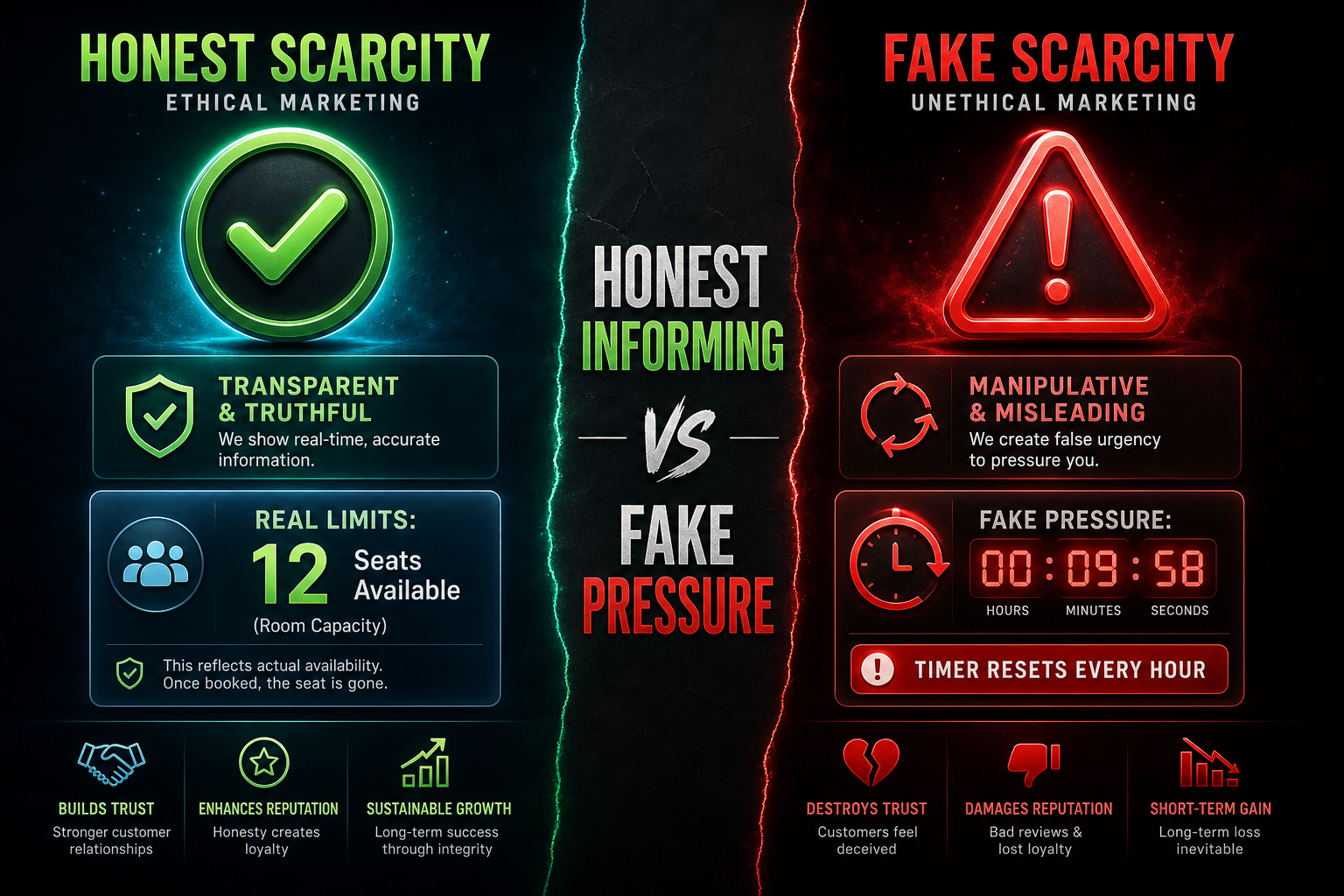
The rule is simple: if you would be embarrassed to explain the limit out loud, it is probably not honest.
Real scarcity adds information. Fake scarcity adds pressure.
The Dark Side: When Scarcity Becomes Manipulation
Some businesses use scarcity to create false urgency. Fake countdown timers that reset. Stock counters that never move. “Last chance” banners that appear every week.
In the short term, these tactics can increase clicks. In the long term, they wear down trust.
Once a customer realizes the urgency was invented, every future offer feels less believable. The brand loses the very thing it was trying to borrow: credibility.
Fake urgency is a loan against trust. The interest is high.
Every honest offer builds long-term confidence. Every fake offer spends it.
The Ethical Line: Urgency vs. Deception
Scarcity is not inherently unethical. It becomes unethical when it is used to make people act against their own interests by hiding or inventing the truth.
Honest urgency clarifies a real decision. Manipulative urgency pressures a decision that would not exist without the deception.
The first respects the customer. The second uses them.
The TarkWorld Principle of Honest Urgency
If the deadline is real, show it. If the stock is limited, say why. If the price will rise, explain when and how much. Urgency should inform decisions, not hijack them.
The goal is not to make people panic. The goal is to make the truth visible in time for it to matter.
Practical Ways to Use Scarcity Well
If you use scarcity in your marketing, these principles keep it honest and effective.
1. Only use real limits. If the stock is not low, do not say it is.
2. Explain the reason. “Only 12 seats because the room holds 12” is more believable than a bare number.
3. Be specific about time. “Ends Friday at 11:59 PM” beats “ends soon.”
4. Keep it occasional. If every week is urgent, nothing feels urgent.
5. Deliver on the promise. If the price goes up after the deadline, honor it.
Scarcity should describe reality, not invent it.
When urgency is honest, it does not pressure people. It helps them make a decision they were already considering—without regret later.
A Tale of Two Offers
Two offers. Same product. Same discount. Different presentation. One builds trust. The other spends it.
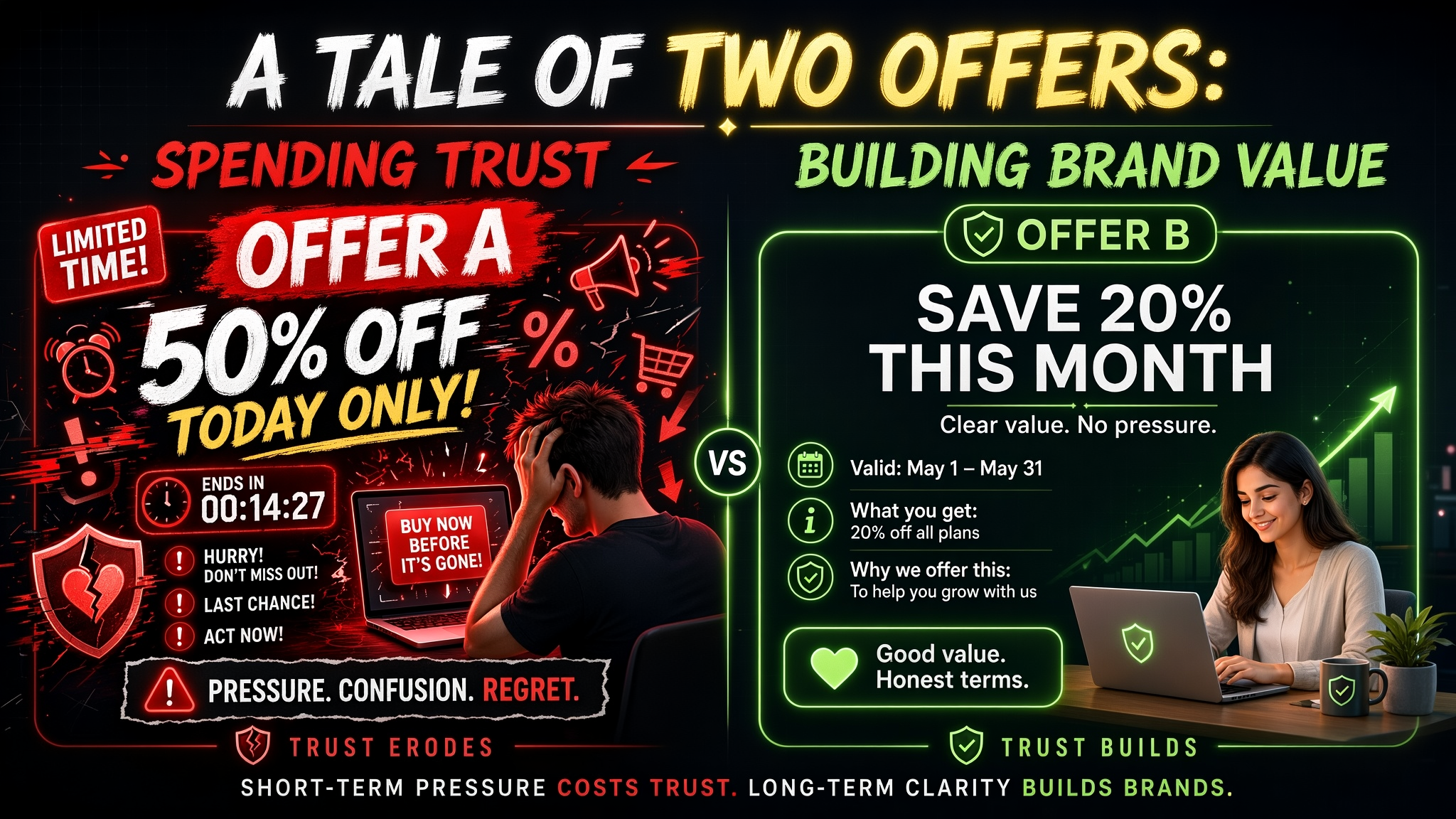
Below is a simple side-by-side. Neither is a rule. They show two ways scarcity can appear in the same offer.
Offer A
A countdown that resets every visit. “Only 2 left” that never changes. A weekly “final sale.” Urgency that feels designed, not real.
Offer B
A specific end date. A real reason for the limit. A clear explanation of what changes afterward. Urgency that feels informative, not forced.
HUMAN INSIGHT
Scarcity does not change what people want. It changes when they act on it.
That is why the same product can sit ignored for months and then sell out in a weekend—simply because a deadline appeared.
The instinct itself is not a flaw. It is part of how humans protect themselves from loss. The question is not whether scarcity works. The question is whether it is being used to help people decide—or to force them.
HUMAN INSIGHT
The brain treats a closing window the same way it treats a closing door. It moves faster because staying still now has a cost.
That instinct exists because waiting used to be dangerous. In a modern marketplace, it can still shape decisions—if the deadline is real enough to believe.
Real urgency moves people. Fake urgency moves them once.
The Bigger Lesson: Urgency Should Clarify, Not Pressure
A limited-time offer is not a problem on its own. It becomes one when it is used to confuse, rush, or trick people into decisions they would not make calmly.
Done honestly, scarcity is simply information delivered in time to matter. It helps people act on what they already wanted.
Done dishonestly, it borrows trust and eventually breaks it.
The brands that last understand this. They use urgency the way they use any other information—truthfully, sparingly, and with respect for the person on the other side of the screen.
A Final Thought for Marketers and Founders
Scarcity is a tool. Like every tool, its value depends on the hand holding it.
Used honestly, it helps people decide. Used carelessly, it wears down the trust that makes future decisions possible.
Marketers who understand this stop asking, “How do I make people act faster?” and start asking, “What truth should I make visible right now?”
That is the version of urgency that builds long-term customers instead of one-time clicks.
Frequently Asked Questions
Why do limited time offers work?
They reduce delay. When a decision has no deadline, it can always be postponed. A closing window turns “later” into “now”—especially for people who were already interested.
Is scarcity always manipulative?
No. Scarcity is only manipulative when it is fake or exaggerated. Real limits, clearly explained, are simply information that helps people decide in time.
What is the difference between urgency and pressure?
Urgency informs. Pressure pushes. Urgency says, “This ends Friday—here is what happens after.” Pressure says, “Act now or you will regret it,” without giving real information.
Can small businesses use scarcity honestly?
Yes. In fact, small businesses often have natural scarcity—limited seats, small batches, seasonal windows. The key is to present those limits honestly and explain why they exist.
Do customers eventually stop believing urgency?
Yes—if the urgency is fake. When every week is a “final sale,” customers stop taking deadlines seriously. Honest, occasional urgency keeps its meaning.
Use urgency honestly. Respect the decision.
Good digital communication is not about adding more information. It is about making the important information easier to notice, understand and evaluate.