Why Familiar Brands Feel Safer: The Mere Exposure Effect Explained
8–10 min read · Human Behavior · Digital Marketing
Think about a brand you trust without thinking about it. You probably do not remember the first time you saw it. You just know it feels familiar—and familiar feels safe.
That quiet comfort is not random. It is the result of something the brain does constantly: it treats things it has seen before as safer than things it has not. This is called the mere exposure effect.
It is one of the simplest and most powerful forces in marketing—and one of the easiest to overlook.
What Is the Mere Exposure Effect?
The mere exposure effect is the tendency to prefer things simply because we have seen them before. Repeated exposure creates familiarity, and familiarity feels safer than novelty.
This happens automatically, without conscious thought. The brain does not ask, “Do I like this?” It asks, “Have I seen this before?” If the answer is yes, it feels less threatening—and often more pleasant.
Brands use this instinct every day, sometimes without realizing it. Logos on repeat, consistent colors, familiar sounds, repeated taglines—these are not just design choices. They are trust signals.
Key idea
The brain prefers what it recognizes, not because it is better, but because it is known.
Novelty can be exciting. But it also carries risk. Familiarity removes that risk. That is why so many buying decisions come down to one simple thing: Have I seen this brand before?
This does not mean new brands cannot succeed. It means that repetition—over time—is one of the most powerful tools a brand has.
Familiarity does not make a brand better. It makes it feel safer.
And when people are deciding where to spend money, safety often matters more than excitement.
Why the Brain Trusts What It Recognizes
Familiarity is a shortcut for safety. For most of human history, the unknown was dangerous. New food, new people, new places—all carried risk. Things that had been seen before and survived were safer by default.
The brain learned to treat familiarity as a signal of safety. Three things happen when we see something repeatedly:
1. Processing gets easier. The brain uses less effort to understand something it recognizes.
2. Uncertainty drops. Known things feel less risky than unknown things.
3. Liking increases. Familiarity itself starts to feel pleasant—even when we cannot explain why.
This is why repetition works so well in advertising. Not because it convinces, but because it makes the brand feel safe.
Where You See the Mere Exposure Effect
The mere exposure effect is not limited to marketing. It shows up everywhere human decisions happen.
1. Advertising. Repeated exposure to a logo, tagline, or jingle creates a subtle sense of trust.
2. Social media. Familiar faces and formats feel more reliable than new ones—even when the content is identical.
3. Politics. Candidates seen more often tend to feel more trustworthy, regardless of their policies.
4. Retail. Products placed at eye level are chosen more often—not because they are better, but because they are seen more.
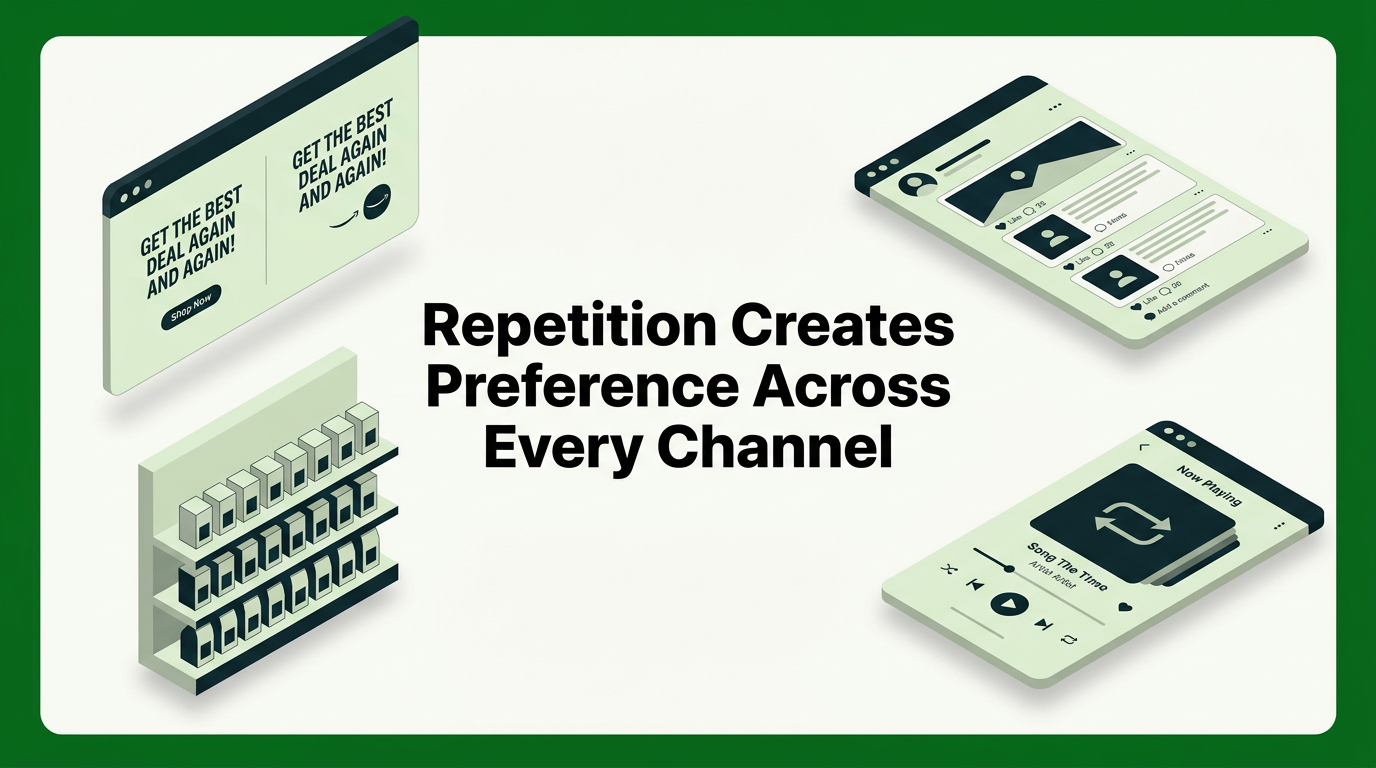
5. Music. Songs we hear more often tend to become our favorites—even if we did not like them at first.
In each case, the effect is the same: repetition creates preference, and preference creates trust. It is a quiet force, but it shapes an enormous number of decisions.
Why Familiar Brands Feel Safer at the Checkout
At the moment of purchase, the brain is doing risk math. It is asking, “Is this safe? Will it work? Will I regret this?” Familiarity answers those questions before the conscious mind has time to ask them.
A brand the buyer has seen before feels lower risk. A brand they have never heard of feels higher risk—even if the product is the same.
This is why brands keep showing up. Not because one ad will convince anyone. Because a hundred small encounters, spread over time, quietly build the belief that this brand is real, reliable, and worth trying.
Familiarity is not a small advantage. It is the ground on which every other advantage stands.
People rarely buy from brands they have never heard of unless something else is doing the trust work for them.
The Dark Side: When Familiarity Becomes Bias
The mere exposure effect is powerful, and like every powerful bias, it can mislead. Familiarity does not mean quality. A brand can be everywhere and still deliver a poor product. A familiar name can feel safe while quietly being unreliable.
This is why the effect should be understood, not blindly trusted. It helps explain why customers behave the way they do—but it should never be a substitute for actually being good.
Familiarity can earn the first try. Only quality earns the second.
Familiarity can open the door. It cannot keep the customer inside.
If the experience does not match the comfort, the customer leaves with a stronger disappointment—because the brand broke trust that it had quietly earned.
The Ethical Line: Consistency vs. Manipulation
Repetition is not manipulation on its own. Every brand repeats its name, its colors, its message. That is not deception—it is how memory works.
It becomes manipulative only when repetition is used to replace truth. Flashing a logo constantly while hiding poor quality, or repeating a claim so often that people stop questioning it—these tactics abuse the brain’s trust in familiarity.
Honest brands use repetition to reinforce something real. Manipulative brands use it to cover something missing.
The TarkWorld Principle of Honest Familiarity
Repeat what is true. A familiar promise is only valuable if the promise itself is honest. Repetition should make truth clearer—not make falsehood feel true.
Familiarity is not a shortcut around trust. It is a way of earning it slowly.
How to Use Familiarity Honestly
If you want familiarity to work for your brand, these principles keep it honest and effective.
1. Stay consistent. Same colors, same tone, same promise—across every channel.
2. Show up regularly. Familiarity is built through repetition over time, not one big campaign.
3. Repeat what is real. Reinforce a real strength, not an invented one.
4. Be patient. Familiarity does not happen overnight. It accumulates quietly.
5. Deliver after the click. Familiarity may earn the first try. The product must earn the rest.
Familiarity is a slow asset. It cannot be rushed.
But when it is built honestly, it does something almost no ad can do: it makes a customer trust a brand before they have any reason to think about it.
A Tale of Two Brands
Two brands. Same product. Same price. Same market. Different levels of familiarity. Very different outcomes.
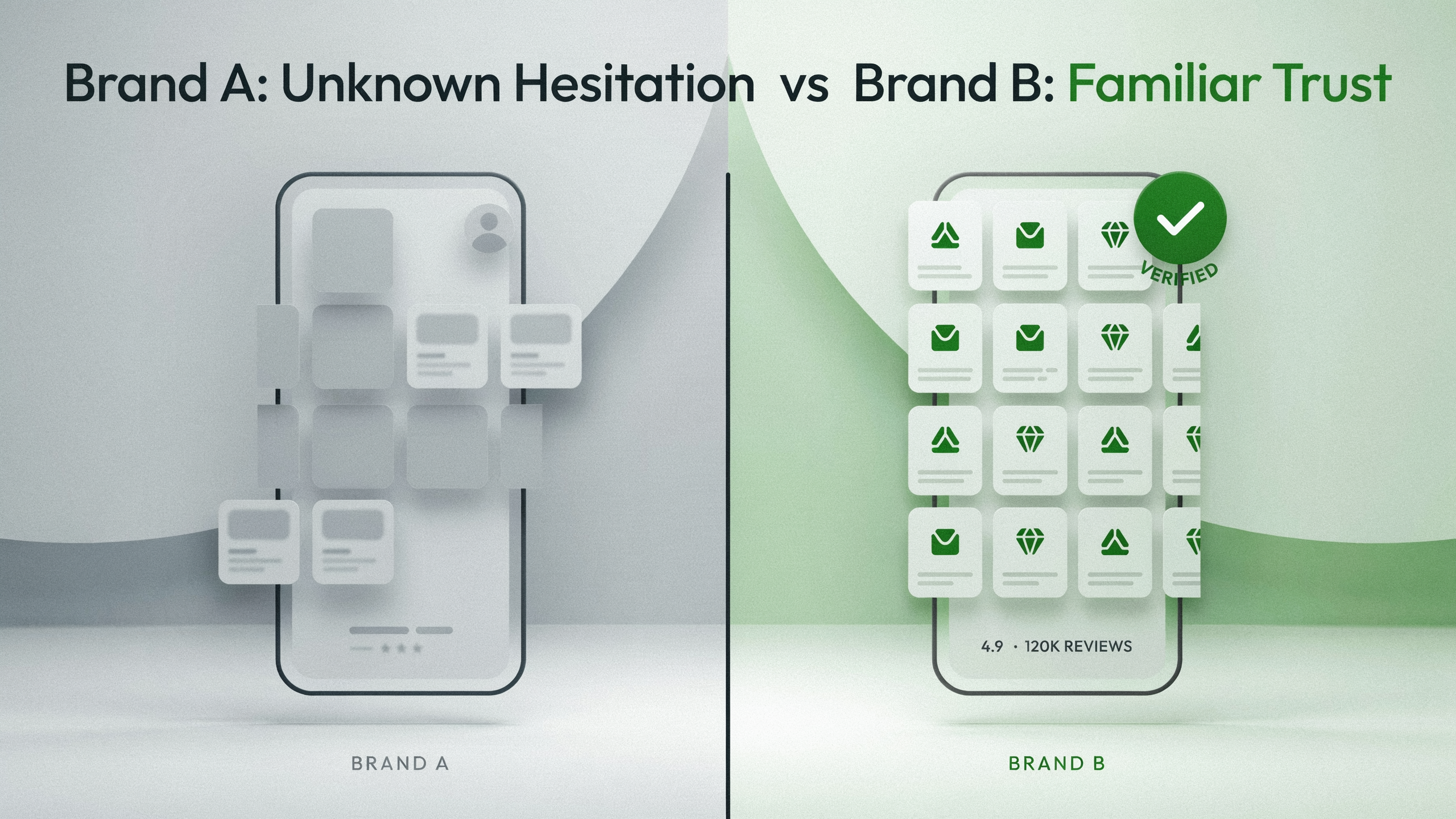
Below is a simple side-by-side. Neither is a rule. They show two ways familiarity can shape the same buying decision.
Brand A
Unknown. No consistent presence. No repeated exposure. The visitor lands, hesitates, and leaves. Not because the product is worse—because the brand has never been seen before.
Brand B
Familiar. The same logo, message, and voice seen many times. The visitor lands, feels an odd sense of comfort, and buys. Not because the brand is better—because it feels safe.
HUMAN BEHAVIOR INSIGHT
The brain is not a fairness machine. It does not judge every brand on its merits. It judges based on how easy the brand is to process, recognize, and trust.
That is why familiarity is such a powerful force. It bypasses analysis and speaks directly to safety. A brand that becomes familiar becomes the default. And defaults, once established, are very hard to replace.
Understanding this changes how you think about branding. It is not just about looking good. It is about showing up so consistently that the brain stops questioning and starts trusting.
HUMAN BEHAVIOR INSIGHT
Familiarity also creates a small sense of ownership. The more we see something, the more we feel we already know it. That feeling of knowing becomes a feeling of preference—and sometimes a feeling of loyalty.
This is why consistent brands often feel like old friends. Not because the brand has done anything extraordinary. Because it has simply shown up, again and again, in the same way.
Consistency is not repetition for its own sake. It is the way trust is quietly stored.
The Bigger Lesson: Familiarity Is Built, Not Bought
Familiarity cannot be manufactured overnight. It is not something a brand can buy in a campaign or hack with a viral moment. It is built slowly, quietly, through repeated, consistent behavior.
That is why the mere exposure effect rewards patience. The brands that show up the same way, again and again, quietly become the default in the customer’s mind. And defaults, once earned, are almost impossible to replace.
Familiarity is not a shortcut. It is a slow, honest path to being trusted without being asked.
That is the kind of trust that lasts.
A Final Thought for Brands and Marketers
Every time a customer sees your brand, they are quietly deciding whether it deserves their trust. They are not reading carefully. They are absorbing the signal. Is this familiar? Is this consistent? Does this feel safe?
You cannot force familiarity. You can only earn it—by showing up the same way, over and over, until the customer stops deciding whether to trust you and simply trusts.
That quiet trust is the most valuable thing a brand can own. It is not built in one campaign. It is built in a thousand small moments that all feel the same.
That is the version of familiarity that lasts.
Frequently Asked Questions
What is the mere exposure effect?
It is the tendency to prefer things we have seen before. Repeated exposure creates familiarity, and familiarity feels safer and more pleasant than novelty—even when we cannot explain why.
Why do familiar brands feel safer?
Because the brain treats familiarity as a signal of safety. Things that are known feel less risky than things that are not. This instinct served us for thousands of years and still shapes how we choose brands today.
How long does it take for a brand to feel familiar?
It depends on how often the audience sees the brand. Some audiences reach familiarity within a few weeks of regular exposure. Others take months or years. What matters is consistency—the same signals, repeated calmly over time.
Can a new brand use this effect?
Yes—especially by being consistent from day one. Same colors, same tone, same message, on every channel. New brands cannot buy familiarity, but they can start building it immediately. Consistency compounds faster than most founders expect.
Is the mere exposure effect always good?
Not always. Familiarity can make us prefer something simply because we have seen it—even if it is not the best option. It can also be used to make weak products feel safer than they are. Understanding the effect helps us see when familiarity is doing the work that quality should.
Show up consistently. Earn quiet trust.
Good digital communication is not about adding more information. It is about making the important information easier to notice, understand and evaluate.