Trust Before Transaction: Why People Need to Believe You Before They Buy
8–10 min read ·— Digital Marketing
Think about the last purchase you hesitated on. Not the price. Not the features. The hesitation was somewhere else.
Is this brand real? Will they deliver? What if something goes wrong? Is this too good to be true?
You were not deciding whether to buy. You were deciding whether to believe. And in that moment, the entire future of that brand depended on something invisible: trust.
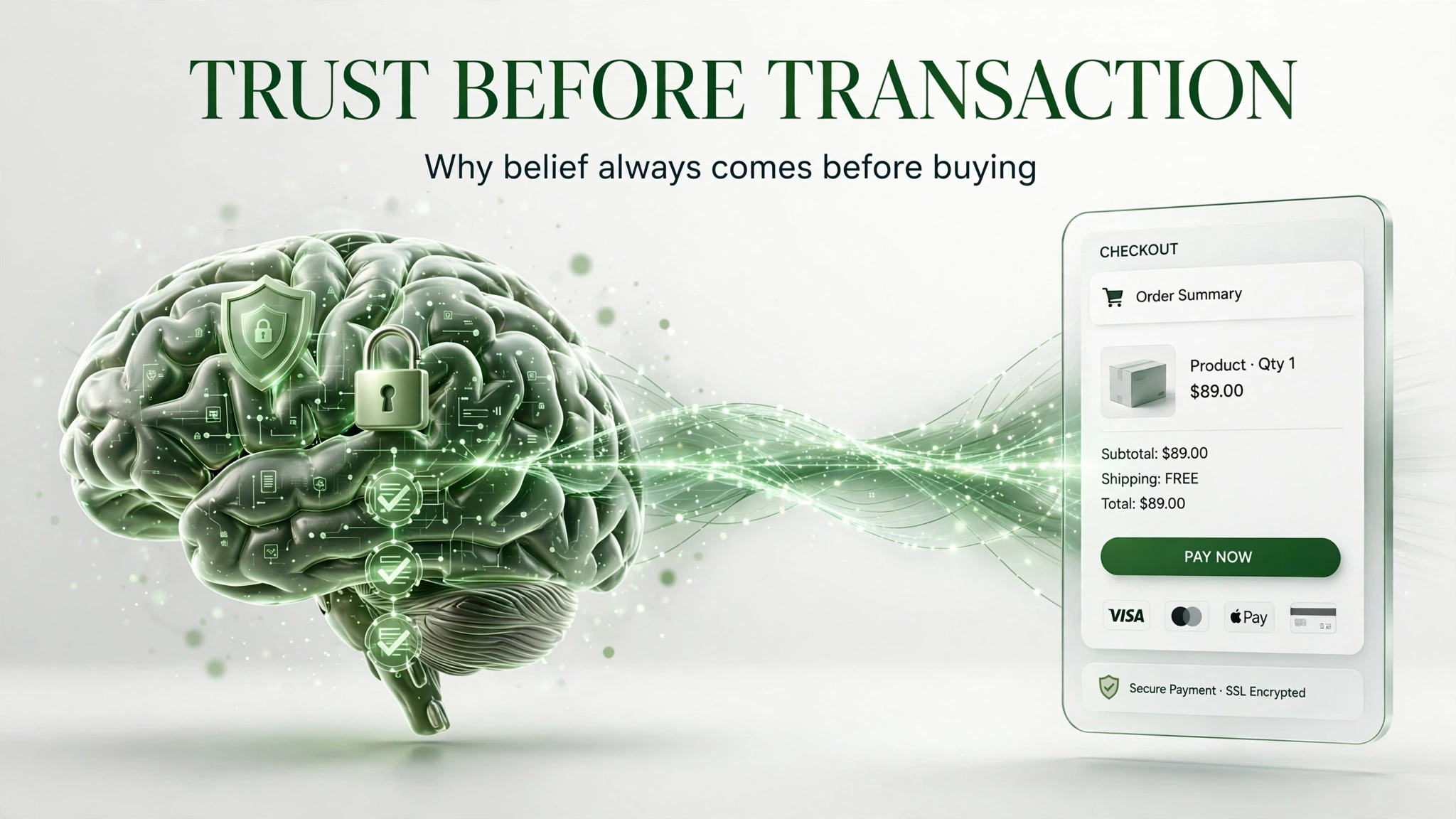
What Does “Trust Before Transaction” Mean?
Trust before transaction is the idea that belief always comes first. No one buys from a brand they do not trust—no matter how good the product looks, how low the price is, or how persuasive the copy is.
Buying is a small act of faith. It requires believing that the product will work, that the brand will stand behind it, and that the customer will not regret the decision. Without that belief, even the best offer feels risky.
This is why trust is not a marketing layer added on top of a business. It is the foundation underneath it.
Key idea
Trust is not created by one great campaign. It is created by a thousand small moments that agree with each other.
A clear promise. A real review. An honest price. A simple return policy. A fast reply. A quiet sense that the brand behaves the same way every time. None of these are spectacular. Together, they are what makes someone willing to pay.
Trust is not a story the brand tells about itself. It is a story the customer tells about the brand—based on evidence they collected quietly, over time.
People do not buy because they are convinced. They buy because they feel safe.
And safety is not a sales tactic. It is a relationship built long before the checkout page appears.
Why the Brain Needs Trust Before It Can Buy
Buying is a risk. The customer gives money before receiving the product. The brain reads this as a loss first, and a gain second. Without trust, that risk feels too high.
Three things happen when trust is present:
1. The perceived risk drops. The customer stops bracing for a mistake.
2. The decision feels easier. Fewer second thoughts, less hesitation.
3. The price feels justified. Trust makes even higher prices feel reasonable.
Without trust, the same offer feels risky, pushy, or even suspicious. Nothing about the product changed—only the belief.
The 5 Signals That Build Trust Before the Sale
Trust is built through signals. The customer is quietly reading them long before they consider buying.
1. Clarity. A brand that explains itself clearly feels safer than one that hides behind vague language.
2. Consistency. The same voice, the same promise, the same quality—every time.
3. Evidence. Real reviews, real numbers, real customer stories. Proof, not just claims.
4. Transparency. Honest pricing, clear terms, real limitations. No surprises.
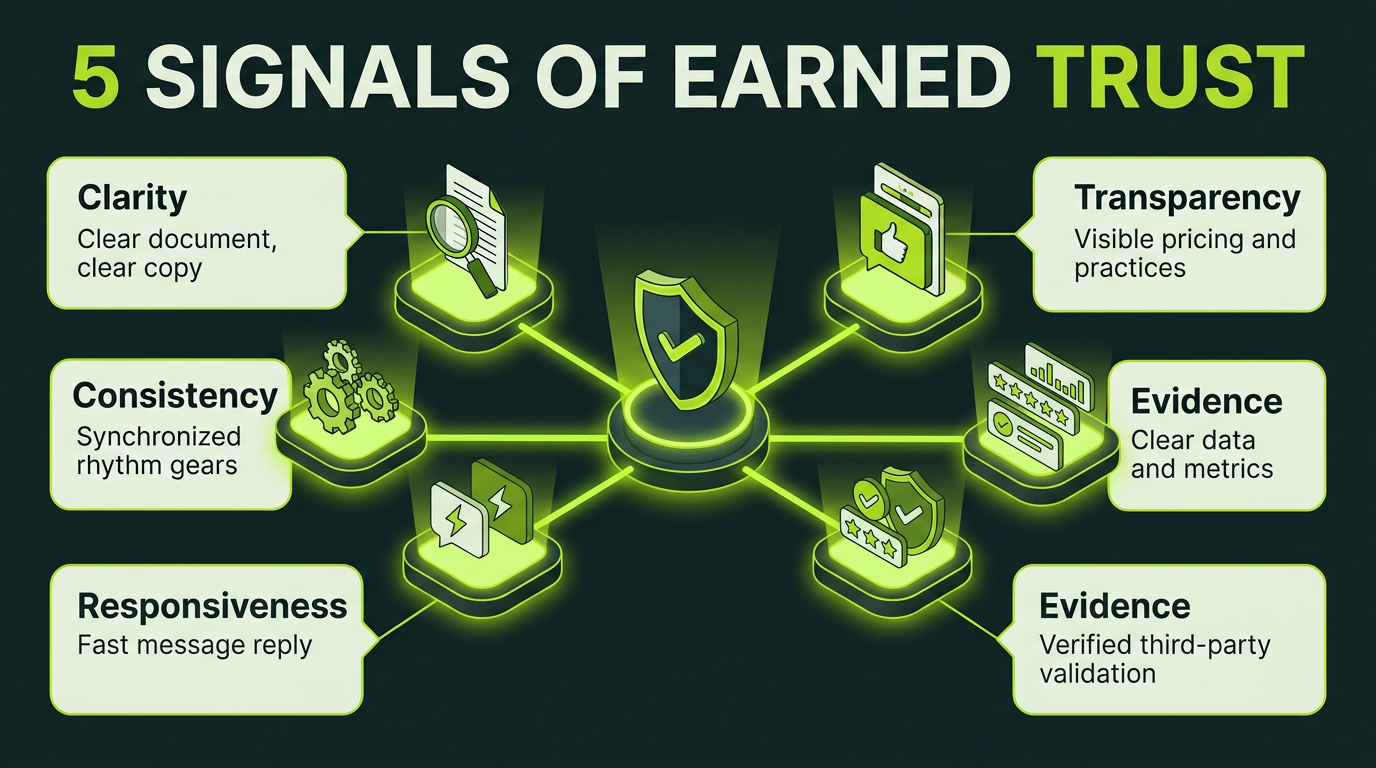
5. Responsiveness. How a brand responds when things go wrong is the strongest trust signal of all. A fast, honest reply can turn a mistake into a long-term relationship.
Notice that none of these are marketing tricks. They are behaviors. Trust is not what a brand says about itself. It is what a brand does when no one is watching the pitch.
Why Trust Is the Real Currency
Money changes hands once per purchase. Trust works every day. It is what keeps a customer coming back, what makes them recommend, what makes them forgive a small mistake, and what makes them choose you over a cheaper alternative.
A brand with strong trust can charge more, launch new products faster, and survive rough patches. A brand without trust is always starting over.
This is why trust is not something you do after the sale. It is something you earn before it—again and again, with every interaction.
Trust is the only asset that appreciates when you give it away.
Every time you honor a promise, listen carefully, or keep your word, the customer’s belief in you gets a little stronger.
How Trust Breaks
Trust builds slowly and breaks fast. A single betrayal can undo years of careful work. The brain remembers the moment trust was broken far more clearly than all the moments it was kept.
Common trust breakers:
1. Hidden costs. Prices that change at the checkout.
2. Overpromising. Claims that turn out to be exaggerated.
3. Ignoring problems. A support team that never replies, or replies without caring.
4. Broken consistency. A brand that feels different every few weeks.
5. Fake signals. Fake reviews, fake urgency, fake authority.
Trust is not destroyed by mistakes. It is destroyed by dishonesty about them.
Customers can forgive a mistake. They rarely forgive being misled.
The Ethical Line: Trust vs. the Illusion of Trust
Some brands try to manufacture trust instead of earning it. They buy fake reviews, use stock testimonials, add badges that mean nothing, or borrow authority they do not have.
These tactics work briefly. They fool enough people, long enough to make a sale. But the customer eventually learns the truth—and the brand loses everything: not just the sale, but the chance of a relationship.
Honest trust is slower, quieter, and far more durable. It does not need tricks because it has something better: real evidence that the brand deserves belief.
The TarkWorld Principle of Earned Trust
Trust should be earned, never borrowed. Every claim should be backed by something real. Every promise should be one you can keep. Every review should be from someone who actually had the experience.
A fake badge may get one sale. A real reputation earns a lifetime of them.
How to Build Trust Before the Sale
If you want customers to believe you before they buy, focus on what happens long before the buy button.
1. Make the first promise simple. A clear claim is easier to trust than a complicated one.
2. Show real evidence. Reviews, results, examples—specific and honest.
3. Be transparent about the trade-offs. Mentioning what a product is not builds more trust than pretending it is perfect.
4. Match the experience to the message. Nothing breaks trust faster than a promise the product cannot keep.
5. Reply like a human. How you respond to questions and mistakes is where trust is truly made.
Trust is not a marketing campaign. It is a way of doing business.
You cannot buy it, fake it, or scale it overnight. You can only earn it—over time, honestly, one small moment at a time.
A Tale of Two Brands
Two brands. Same product. Same price. Same market. Different levels of trust. Very different outcomes.
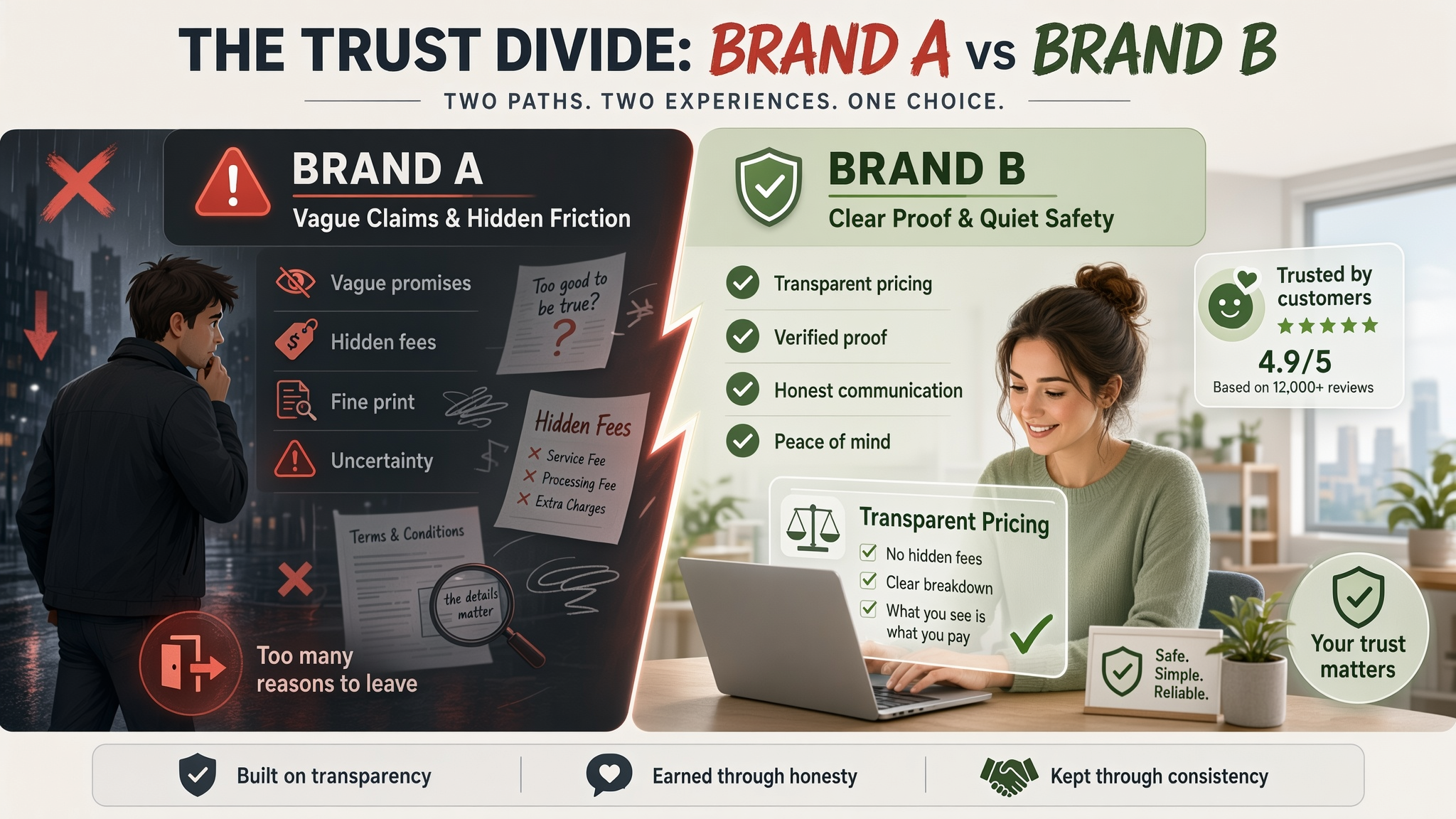
Below is a simple side-by-side. Neither is a rule. They show two ways trust can appear—or fail—before a single sale is made.
Brand A
Loud claims, vague reviews, hidden fees, slow replies. The visitor scrolls the page and feels something is off. They leave without buying. Not because the product is bad—because the brand did not earn belief.
Brand B
Clear promise, specific reviews, honest pricing, real answers. The visitor reads, feels the quiet consistency of the brand, and buys. Not because they were convinced—because they felt safe believing.
HUMAN BEHAVIOR INSIGHT
Humans are social and cautious by design. We trust what we can predict. We avoid what we cannot understand. In a marketplace full of strangers, trust is the only way to make the unfamiliar feel safe.
That is why trust always comes first. Not as a marketing step, but as a human one. The buyer must believe before they can buy.
Understanding this changes how you build a brand. Not as a machine for selling, but as a place people feel safe enough to believe.
HUMAN BEHAVIOR INSIGHT
The brain is constantly calculating risk. When it decides to trust someone, it is quietly deciding that the benefit of believing is bigger than the danger of being wrong. Every trust signal a brand gives is one fewer risk the brain has to calculate.
This is why trust feels invisible but is always working. It is the silent math happening behind every purchase.
Trust does not push a customer forward. It removes the reasons to step back.
The Bigger Lesson: Belief Is the First Purchase
Before anyone buys anything, they buy something else first: belief. They buy the idea that this brand is real, that this product will work, and that the decision will not be regretted.
Everything else—pricing, packaging, campaigns, funnels—depends on that belief. Without it, every offer feels risky. With it, even a simple offer feels obvious.
That is why the job of marketing is not to convince people to buy. It is to give them enough reason to believe. When belief is there, the transaction takes care of itself.
The first sale is not the product. It is trust.
A Final Thought for Founders and Marketers
Founders often ask, “How do I grow faster?” A better question is, “How do I earn belief sooner?” Because faster growth is not the result of more ads or louder copy. It is the result of more trust—built earlier, deeper, and more honestly.
Brands that earn trust before they ask for money grow quietly and steadily. Brands that skip this step keep starting over, chasing the next customer who never quite believes them.
That is the version of growth that lasts.
Frequently Asked Questions
Why does trust matter more than price or features?
Because price and features only matter if the buyer believes the brand will deliver. A great product from a brand no one trusts is invisible. A simple product from a brand people believe in sells easily. Trust is the condition that makes everything else matter.
How long does it take to build trust?
There is no fixed timeline. It depends on how often the brand shows up honestly. Some brands earn trust in weeks; others take years. What matters is not speed, but consistency. Trust grows every time a promise is kept—and it shrinks every time one is broken.
Can a new brand earn trust quickly?
Yes—if it is honest and specific. Real customer stories, clear product claims, transparent pricing, and quick responses can earn trust faster than polished ads. People trust what feels real, especially from new brands that have less to hide behind.
What if my product is genuinely good?
Good product quality alone does not create trust. Trust comes from how that quality is communicated and confirmed. If people do not know about it, they cannot believe it. If no one has shared their experience, no one else can trust it. Quality plus honest proof is what earns belief.
Can trust be rebuilt after it breaks?
Yes, but it takes longer than it took to earn the first time. Honest acknowledgment, real change, and consistent behavior over time can rebuild belief. What cannot rebuild trust is pretending nothing happened, or covering up the mistake with more marketing.
Earn belief first. The sale will follow.
Good digital communication is not about adding more information. It is about making the important information easier to notice, understand and evaluate.