Why People Remember Stories Better Than Advertisements
8–10 min read · Human Behavior · Digital Marketing
Think of the last advertisement you saw. Can you remember what it said?
Now think of the last story someone told you. A friend’s bad flight. A colleague’s interview disaster. A random story from a podcast. You can probably recall details—who was there, what happened, how it ended.
Advertisements ask for attention. Stories earn it. And that difference shapes what stays in the mind long after the screen goes dark.
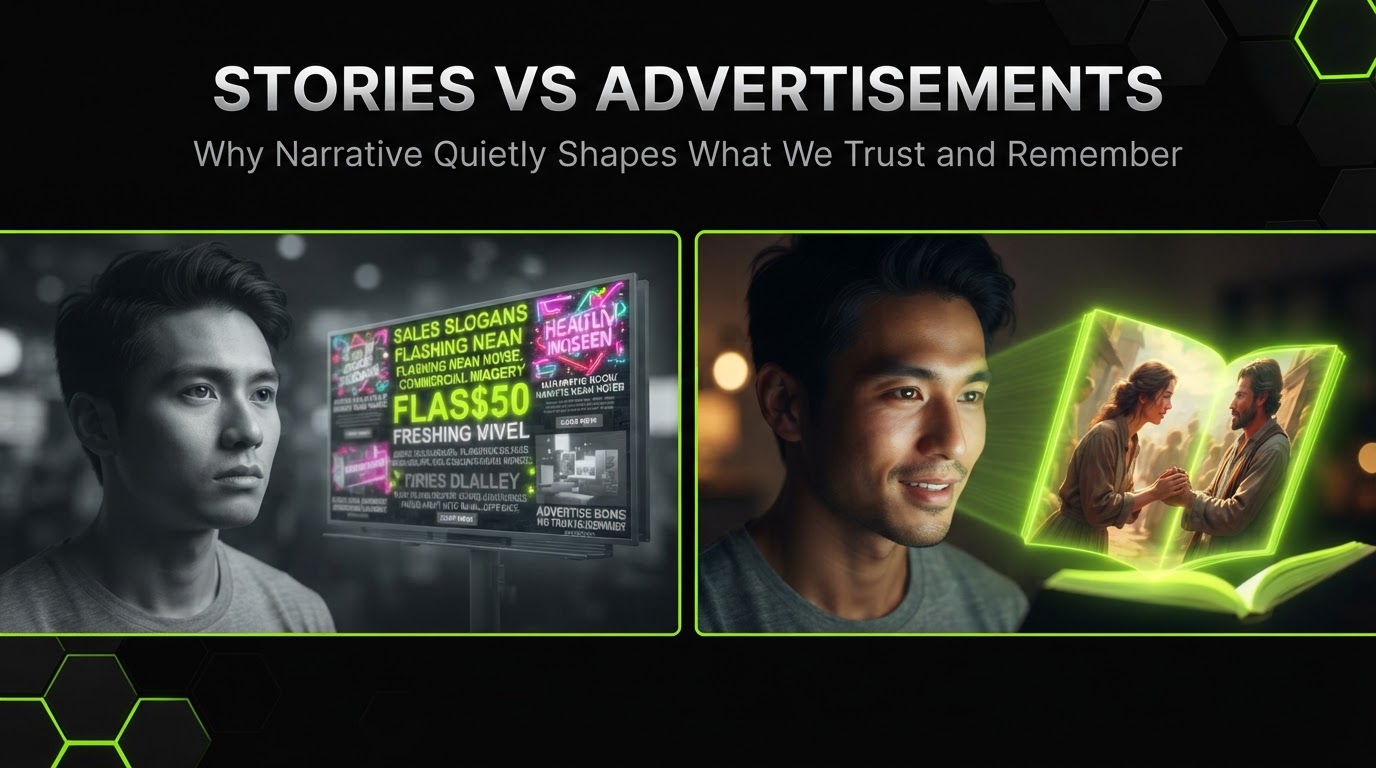
What Makes a Story Stick?
Stories are how the brain organizes experience. They give events a shape: a beginning, a middle, an end. They attach emotion to information. They turn abstract ideas into something the mind can hold.
An advertisement usually presents a claim. A story presents an experience. Claims have to be evaluated. Experiences can be imagined.
That is why a story about a customer’s first day using a product often does more than a bullet list of features. The story lets the reader live inside the outcome.
Key idea
People do not remember facts. They remember feelings attached to events.
A statistic about customer satisfaction fades within minutes. A story about one customer who finally solved a problem they had struggled with for years can stay for months.
The story is not more accurate than the statistic. It is more human. And the human mind remembers what feels human.
A story is not a container for information. It is the way information becomes memory.
When you tell a story, you are not just sharing facts. You are giving the listener something to hold.
What Happens in the Brain During a Story
When we hear a story, something remarkable happens. The brain does not treat it as data. It treats it as experience.
1. Sensory areas activate. Describing a smell can light up the same regions used for smelling.
2. Emotions engage. Conflict, surprise, and relief release chemicals that strengthen memory.
3. Meaning is attached. The brain files the story as something that matters, not something that was simply said.
This is why stories are remembered and statistics are forgotten. The brain did not store the information. It stored the moment.
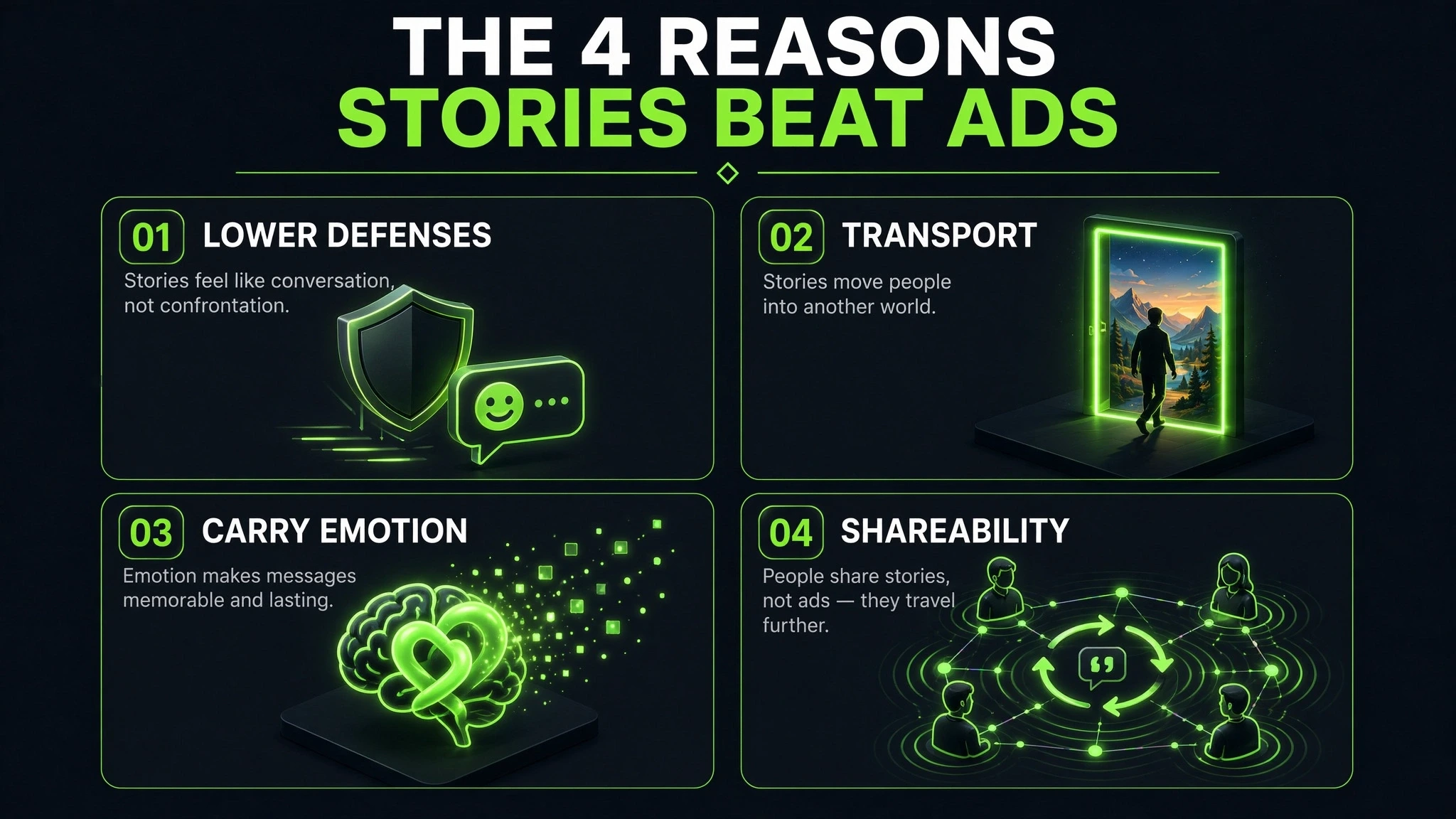
The 4 Reasons Stories Beat Ads
Stories are not just more pleasant than ads. They are structurally more effective at building memory and trust.
1. Stories lower defenses. Ads feel like persuasion. Stories feel like conversation. The mind listens differently when it does not feel sold to.
2. Stories create transport. The reader imagines themselves inside the scene. That imagined experience becomes a kind of memory.
3. Stories carry emotion. Emotion strengthens memory. A story that makes someone feel something is remembered longer than a claim that simply informs them.
4. Stories are shareable. People do not repeat statistics. They repeat stories. And every retelling extends the brand’s reach without any additional spend.
None of this means ads do not work. It means ads work better when they borrow the structure of a story. A claim tells. A story shows. And what is shown is what gets remembered.
Why Facts Alone Don't Persuade
Facts are important. But facts alone rarely change behavior. They inform, but they do not move. A person can know all the reasons to exercise and still not start. A person can know all the reasons to save money and still spend.
Stories change behavior because they attach information to emotion and identity. They do not just tell someone what to do. They help them imagine being the kind of person who does it.
That imagined identity is often more persuasive than any statistic.
Facts tell us what is true. Stories tell us what is possible.
And possibility is what people act on.
The Structure of a Memorable Story
Not every story works. The stories that stick usually follow a shape.
1. A relatable character. Someone the audience can see themselves in.
2. A specific problem. A struggle the audience already knows too well.
3. A turning point. The moment when something changes—usually because of the product, the idea, or the decision.
4. A clear outcome. Not just what happened, but what it felt like.
Specific stories feel more universal than general ones.
The more precise the detail, the more likely a stranger sees themselves in it. Vagueness feels distant. Specificity feels personal.
The Ethical Line: Storytelling vs. Manipulation
Stories are powerful, and power invites misuse. Brands can invent testimonials, exaggerate transformations, or script stories that sound real but are not. These shortcuts work briefly—and then they damage trust.
A story becomes manipulation when it uses emotion to hide the truth. It stays honest when it uses emotion to make the truth visible.
The difference is not the intensity of the story. It is the integrity behind it.
The TarkWorld Principle of Honest Storytelling
Tell stories that reflect what is true. Use emotion to reveal reality, not to replace it. A story should help the audience understand, not just feel.
Fiction has its place. But when a brand tells a story as if it were true, it spends trust that is very hard to earn back.
How to Use Stories in Marketing
Storytelling is not limited to long-form content or brand films. It can appear anywhere a message is delivered.
1. Product pages. Add a short customer story above the features. Let the reader meet the person before the product.
2. Ads. Replace one benefit bullet with a moment. A specific moment sticks better than a list.
3. Emails. Open with a small scene, not a pitch. A scene earns the next line.
4. Social posts. Share a real customer moment, not a generic quote.
5. Landing pages. Use one strong story instead of five medium ones. Depth beats breadth.
Stories are not decoration. They are structure.
They give your message a shape the brain can hold, remember, and pass on.
A Tale of Two Messages
Two messages. Same product. Same price. Same audience. Different form. One is forgotten. The other is remembered.
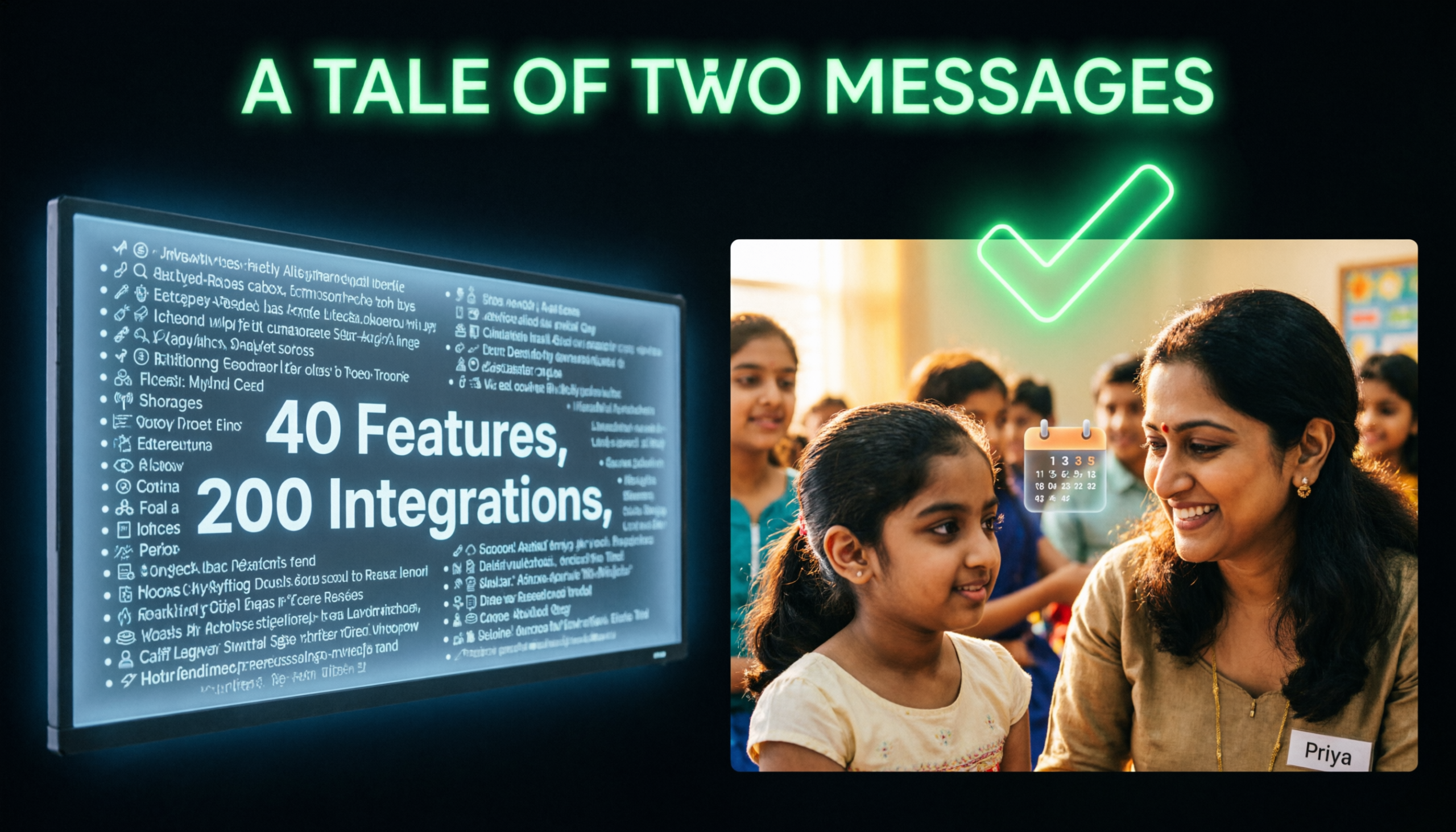
Below is a simple side-by-side. Neither is a rule. They show two ways the same message can be delivered.
Message A
“Our software helps teams be more productive. It has 40 features and integrates with 200 tools.” Factual, crowded, forgettable. The reader knows what it does but feels nothing about it.
Message B
“Priya missed her daughter’s school play because of a last-minute project. The following week, she finished the same work in half the time—and made it to the next one.” Specific, human, memorable. The reader feels the problem and the relief.
HUMAN INSIGHT
Humans are not information processors. We are story processors. We have been telling stories around fires and across tables for tens of thousands of years. The brain is still shaped by that habit.
Advertising is a very recent invention. Storytelling is ancient. The mind treats them very differently.
This is why storytelling is not just a marketing technique. It is the most natural way humans have ever passed on what matters.
HUMAN INSIGHT
Stories are remembered because they are stored as experience, not as data. When the brain relives a moment—even an imagined one—it stores it differently than it stores a fact.
That is why a customer who reads a story often feels like they have already used the product. The story gave them a small preview of the experience.
The mind remembers what it lived through. Stories let it live through more.
The Bigger Lesson: People Buy Meaning, Not Messages
People do not buy products because of features. They buy them because of what the features make possible—and stories are what make possibility visible.
A story gives a product meaning. It shows what changes in someone’s life. It connects the thing being sold to the person considering it.
That connection is what gets remembered. And what gets remembered is what gets repeated, recommended, and returned to.
A brand that tells honest stories does not just advertise. It becomes part of how customers remember their own lives.
A Final Thought for Marketers and Storytellers
Advertising interrupts. Stories invite. That is the entire difference.
A good story does not shout. It sits down beside the reader, shows them something real, and lets them walk away changed. That change is what brings them back.
Brands that master storytelling do not just sell more. They become the story their customers tell about themselves.
That is the version of marketing that lasts.
Frequently Asked Questions
Why do people remember stories better than ads?
Because the brain stores stories as experience, not as data. Experiences are tied to emotion and meaning, so they are remembered longer. Ads usually present claims, which the brain stores as information—and information fades quickly.
What makes a story memorable?
A relatable character, a specific problem, a turning point, and a clear outcome. Specific details and emotional honesty matter more than dramatic twists. The reader should be able to see themselves in the story.
Can ads still work in a world of storytelling?
Yes—especially when ads borrow the structure of a story. A short scene, a real moment, or a specific outcome can make a 15-second ad feel personal rather than promotional. The format is not the problem. The lack of story often is.
How do brands avoid manipulative storytelling?
By telling stories that reflect reality. Use emotion to reveal a real outcome—not to invent one. If a story is invented, label it. If a customer story is used, use it with permission and without exaggeration.
Do small businesses need storytelling too?
Especially small businesses. Larger brands can rely on familiarity. Smaller brands need to build trust quickly—and stories are one of the fastest ways to do it. A single honest customer story can do more than a year of polished copy.
Tell the truth. Tell it as a story.
Good digital communication is not about adding more information. It is about making the important information easier to notice, understand and evaluate.