Attention Is the New Currency: How Humans Decide What Deserves Their Attention
8–10 min read — Digital Marketing
Every day, you are offered thousands of things to look at. Headlines, notifications, ads, videos, messages, reminders, pop-ups, pitches.
You will notice only a handful. You will remember even fewer.
This is not because you are lazy or distracted. It is because attention is limited—and the brain is constantly deciding what is worth it. In the digital world, attention has become the scarcest resource of all, and it is spent with the same carefulness as money.
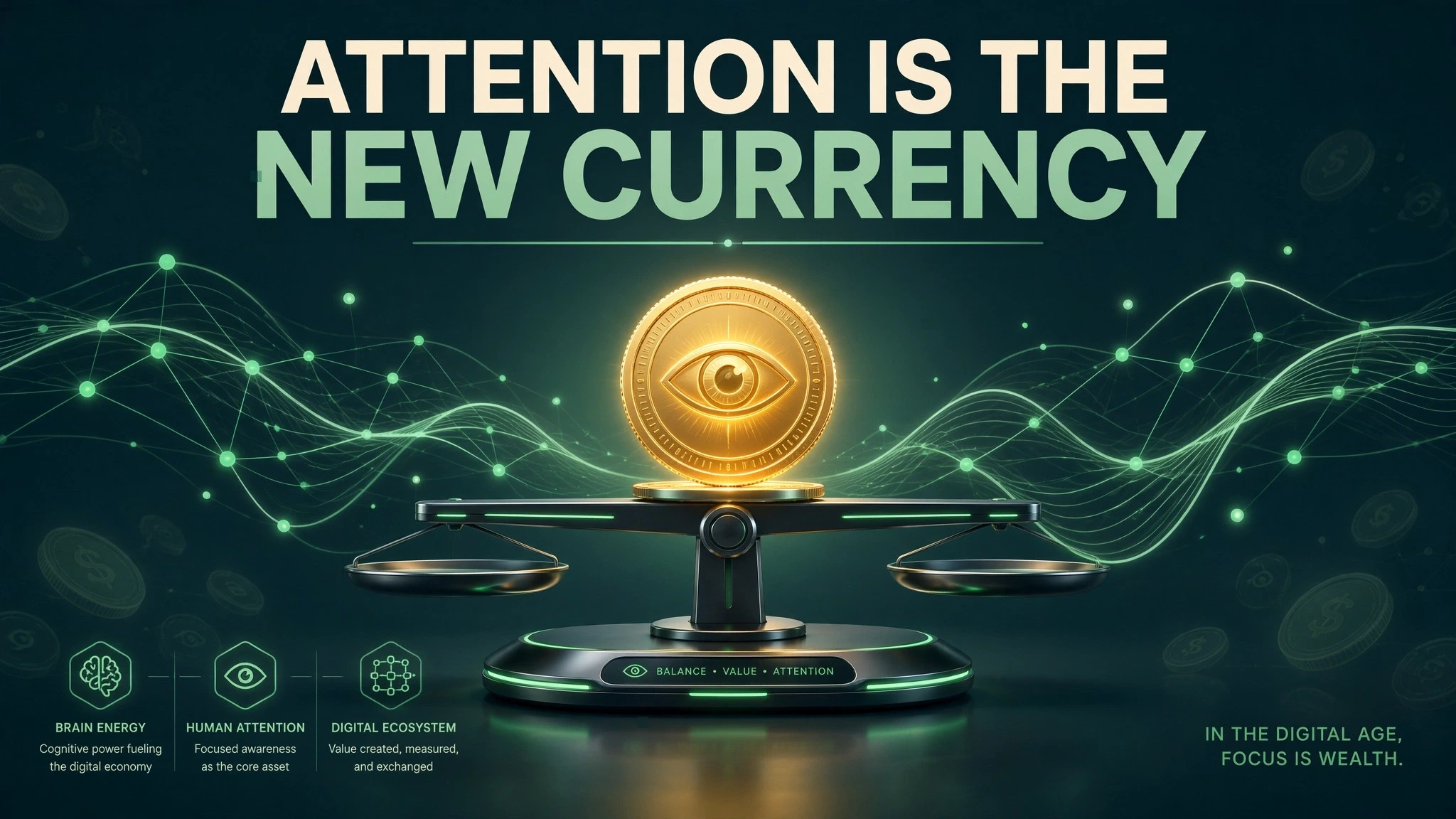
Why Attention Is the New Currency
Attention is the moment before everything else. Before a click, a purchase, a follow, a share—there is a split second where the brain decides whether to care. That decision is the real currency of the digital world.
Money buys ads. Data informs ads. But without attention, neither matters. A billboard no one looks at is worthless. A video no one watches is invisible. A post no one reads is gone.
This is why so much of modern marketing is not really about selling. It is about earning the right to be noticed in the first place.
Key idea
Attention is not given. It is earned in the first three seconds.
The brain is not scanning for what is best. It is scanning for what is most worth its limited energy right now. Every headline, image, and opening line is competing against everything else on the screen—and against everything the user brought with them: mood, fatigue, distraction, and doubt.
To earn attention, a message must answer one silent question fast: what makes this worth my time?
Attention is not taken. It is offered—briefly—to whatever feels most useful or most interesting in that moment.
Everything else is scrolled past, ignored, or forgotten.
How the Brain Decides What to Notice
Attention is not a spotlight. It is a filter. The brain constantly runs a fast background process that asks three questions:
1. Is this relevant to me? Personal, specific, or clearly aimed at the reader’s problem.
2. Is this easy to understand? Clear structure, simple language, obvious meaning.
3. Is this worth my energy right now? Value or emotion strong enough to justify the cost of paying attention.
If any of these fail, the message is skipped—before the reader even realizes they skipped it.
The 5 Forces That Capture Attention
Not every message competes the same way. Five forces pull attention more strongly than others.
1. Novelty. New things grab the brain faster than familiar ones.
2. Relevance. Personal, specific, or timely messages are noticed first.
3. Emotion. Content that makes us feel something—surprise, curiosity, joy, concern—holds attention longer.
4. Clarity. Simple, well-structured messages are easier to enter and harder to leave.
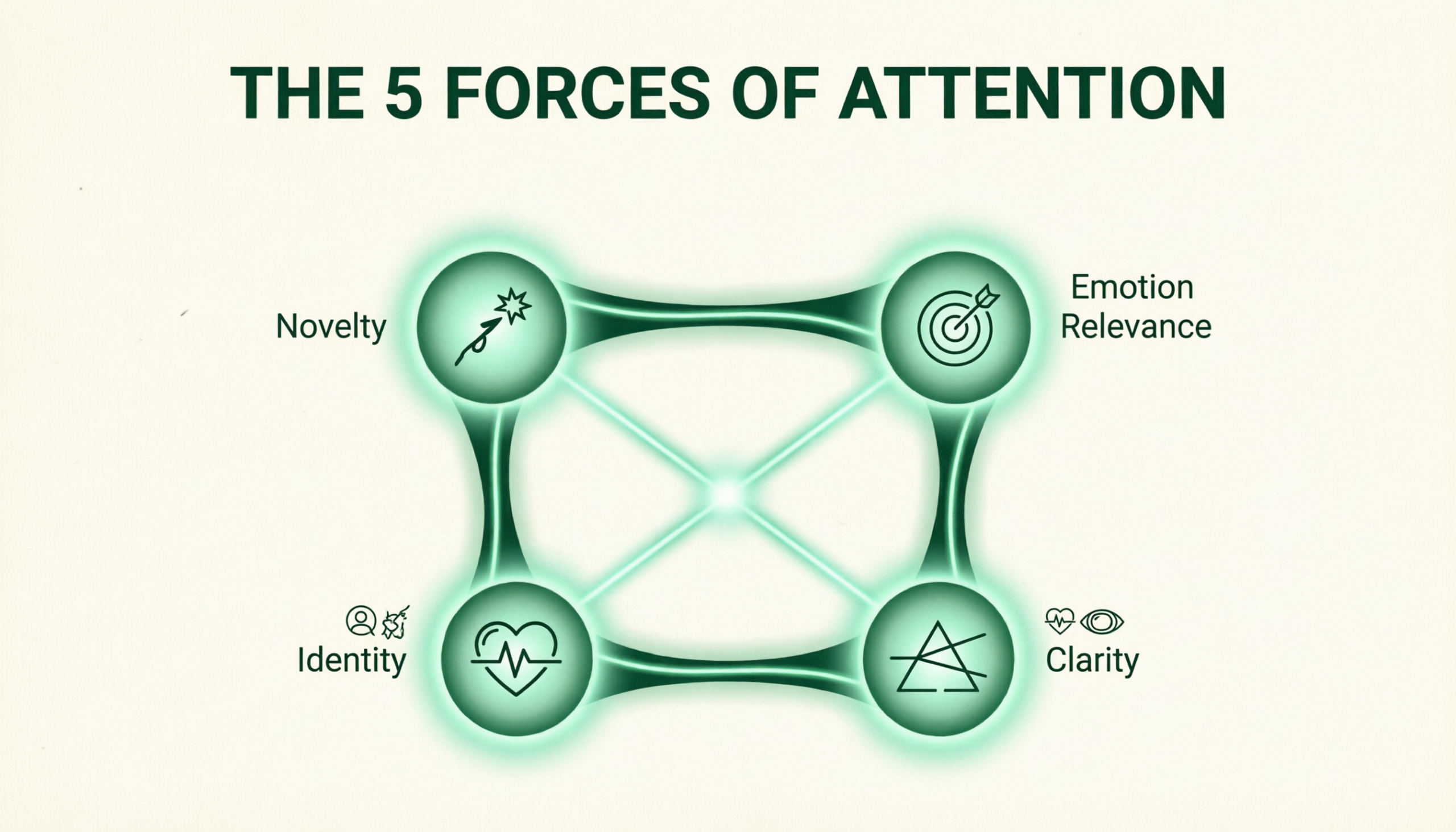
5. Identity. Content that says “this is for people like you” or “this is us” is noticed faster and remembered longer.
None of these forces require shouting. They require matching the message to the moment. The best attention is not forced. It is invited.
Why Attention Is Now Scarce
A hundred years ago, information was scarce. Today, information is infinite. But the human capacity to process it has not changed. This mismatch is what makes attention so valuable.
We now live in a world where the supply of content is unlimited and the supply of attention is fixed. That simple imbalance explains almost everything about how modern media, marketing, and design behave. When something is scarce, it becomes expensive. And attention, being the scarcest resource online, is now worth more than almost anything else.
When information is abundant, attention becomes the bottleneck.
Whoever can hold attention—honestly—holds the advantage.
The Attention Span Myth
People often say attention spans are shrinking. The truth is more subtle. What has shrunk is patience for boredom. People will still watch a three-hour podcast if it is interesting. They will still read a long article if it is meaningful. They will still sit through a film if it earns the time.
What people no longer tolerate is content that does not immediately feel worth it. Attention is not short. It is selective. It is offered generously to what feels alive, and withdrawn instantly from what feels empty.
People do not have short attention spans. They have short tolerance for things that fail to earn their time.
That is a very different problem—and a much more solvable one.
The Ethical Line: Earning Attention vs. Stealing It
Attention can be earned, or it can be taken. The difference matters.
Earned attention is honest: clear headlines, useful content, real value. Taken attention is manipulative: clickbait that fails to deliver, fear-based framing, outrage-bait, fake urgency, or algorithms that trap users in endless loops.
Stolen attention works briefly. But it leaves a residue of frustration, mistrust, and fatigue. Earned attention compounds over time. It creates loyalty, memory, and a reason to return.
The goal is not to win the click. It is to deserve the click.
The TarkWorld Principle of Earned Attention
Earn the click by making the reward visible in the first three seconds. Never promise attention you cannot honor. What you offer in the headline must be delivered inside the content.
A stolen click is a short-term win. An earned click is a long-term relationship.
How to Earn Attention Honestly
Attention is not a trick. It is a skill. These principles help without crossing into manipulation.
1. Lead with the value. Put the most useful or interesting thing in the first line.
2. Be specific. Vague headlines feel forgettable. Specific ones feel relevant.
3. Match the audience. Speak to a real person, not a general crowd.
4. Structure for scanning. Clear headings, short paragraphs, obvious path forward.
5. Deliver immediately. The content must reward the click—fast and fully.
Attention is not the goal. It is the doorway.
Once the visitor is inside, the real work begins: helping them understand, trust, and remember what they found.
A Tale of Two Headlines
Two headlines. Same article. Different amounts of attention. The difference is not the topic. It is the respect for the reader’s time.
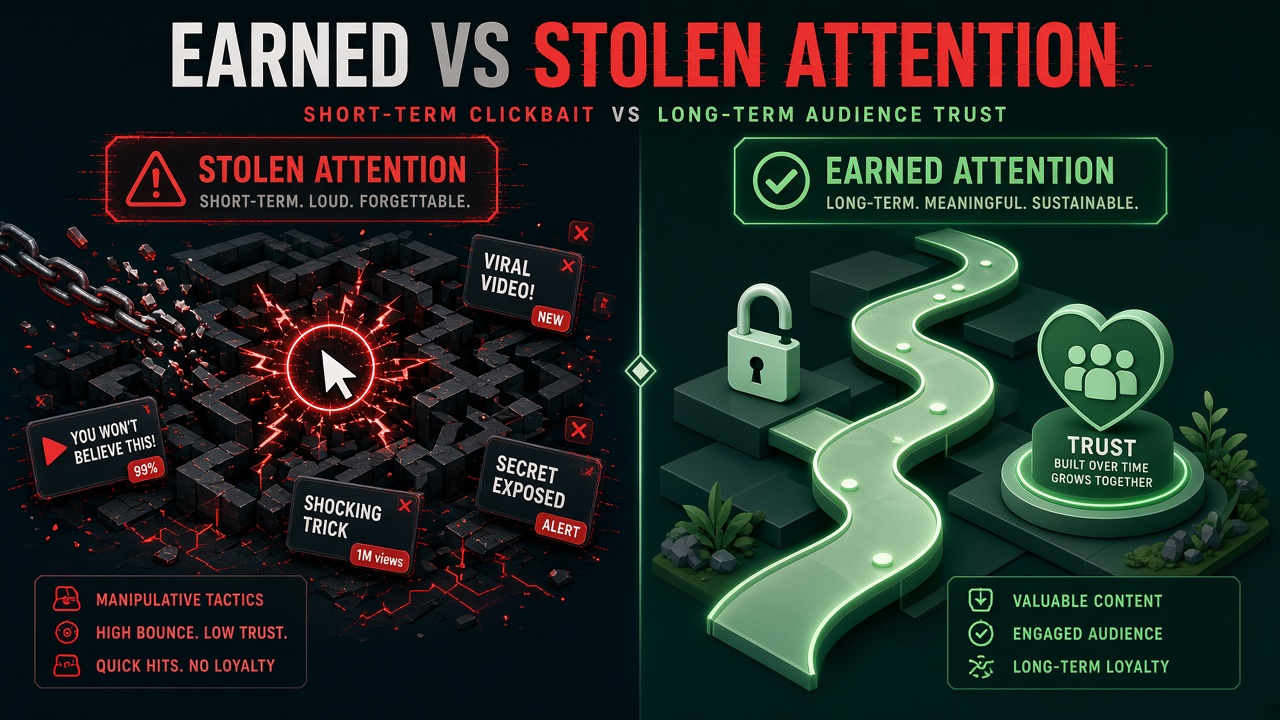
Below is a simple side-by-side. Neither is a rule. They show two ways the same content can earn or lose the visitor’s first three seconds.
Headline A
“You Won’t Believe What Happened Next…” Clickbait. Curiosity is triggered, but nothing is promised. The reader clicks, feels tricked, and leaves. Attention was taken. Trust was lost.
Headline B
“How One Small Change Saved This Team Three Hours a Week” Clear value, specific outcome, no exaggeration. The reader knows what they will get. They click because it is worth their time—and they stay because it delivers.
HUMAN INSIGHT
Attention is not just a marketing metric. It is a fundamental human resource—limited, valuable, and personal. Every time someone gives attention to a piece of content, they are choosing it over everything else they could have looked at instead.
That choice deserves respect. The brands and creators who understand this stop trying to grab attention and start trying to earn it. And the ones who earn it are the ones who keep it.
Attention is not something you can own. It is something you are trusted with—briefly—and either rewarded or withdrawn. The question is not how to take more. It is how to be worth more.
HUMAN INSIGHT
The brain is not scanning for what is best. It is scanning for what is most worth its limited energy right now. Attention is not about value in the abstract. It is about value in this moment, for this person, with this mood and this task at hand.
This is why timing, tone, and context matter as much as content itself.
The best message in the world will fail if it arrives when nobody has the attention to hear it.
The Bigger Lesson: Attention Is a Trust, Not a Trophy
Attention is not a number. It is a moment of trust—a small, silent agreement that what you have to say is worth the seconds it takes to hear. That trust is not given forever. It is renewed every time you speak.
Brands and creators who remember this do not chase algorithms. They build relationships. They do not fight for the click. They earn the click. And they deliver on what the click promised.
That is what it means to treat attention as currency: to spend it carefully, and to give back more than you take.
Attention is not the destination. It is the beginning of a relationship.
A Final Thought for Marketers and Creators
The most successful creators and brands of this decade will not be the loudest. They will be the most trusted. They will not try to steal attention. They will try to be worth it.
When you respect the visitor’s time, you are not just earning a click. You are earning a habit. You are earning a place in their day. And that, in a crowded world, is the most valuable thing a brand can have.
That is the version of attention that lasts.
Frequently Asked Questions
Why is attention called the new currency?
Because attention is limited, valuable, and spent the way money is—carefully. In a world of infinite content, attention is scarce. Whoever earns it gains everything that follows: awareness, trust, and eventually, action.
How does the brain decide what to pay attention to?
The brain runs a fast filter asking three questions: Is this relevant to me? Is it easy to understand? Is it worth my energy right now? If any answer is unclear or negative, the message is skipped—often before we consciously notice.
Are attention spans really getting shorter?
Not exactly. What has shortened is patience for things that fail to earn attention. People still watch long podcasts, read long articles, and follow deep content—if it feels worth the time. Attention is selective, not short.
Is clickbait an effective way to earn attention?
Clickbait steals attention—it does not earn it. The click may happen, but the trust does not. When the promise is not delivered, the reader leaves with a small feeling of frustration. That frustration stacks up. Eventually, the audience stops clicking altogether.
How can small brands earn attention honestly?
By being specific, useful, and clear. Small brands have one big advantage: they can speak directly to a narrow audience in a way large brands cannot. One honest message aimed at the right person often earns more attention than a broad message aimed at everyone.
Earn attention. Respect the moment.
Good digital communication is not about adding more information. It is about making the important information easier to notice, understand and evaluate.