Why People Buy Things They Don’t Actually Need
The psychology behind impulse buying—and why a purchase can feel right long before it feels necessary.
8–10 min read ·
The Midnight Cart and the Mystery of the Linen Apron
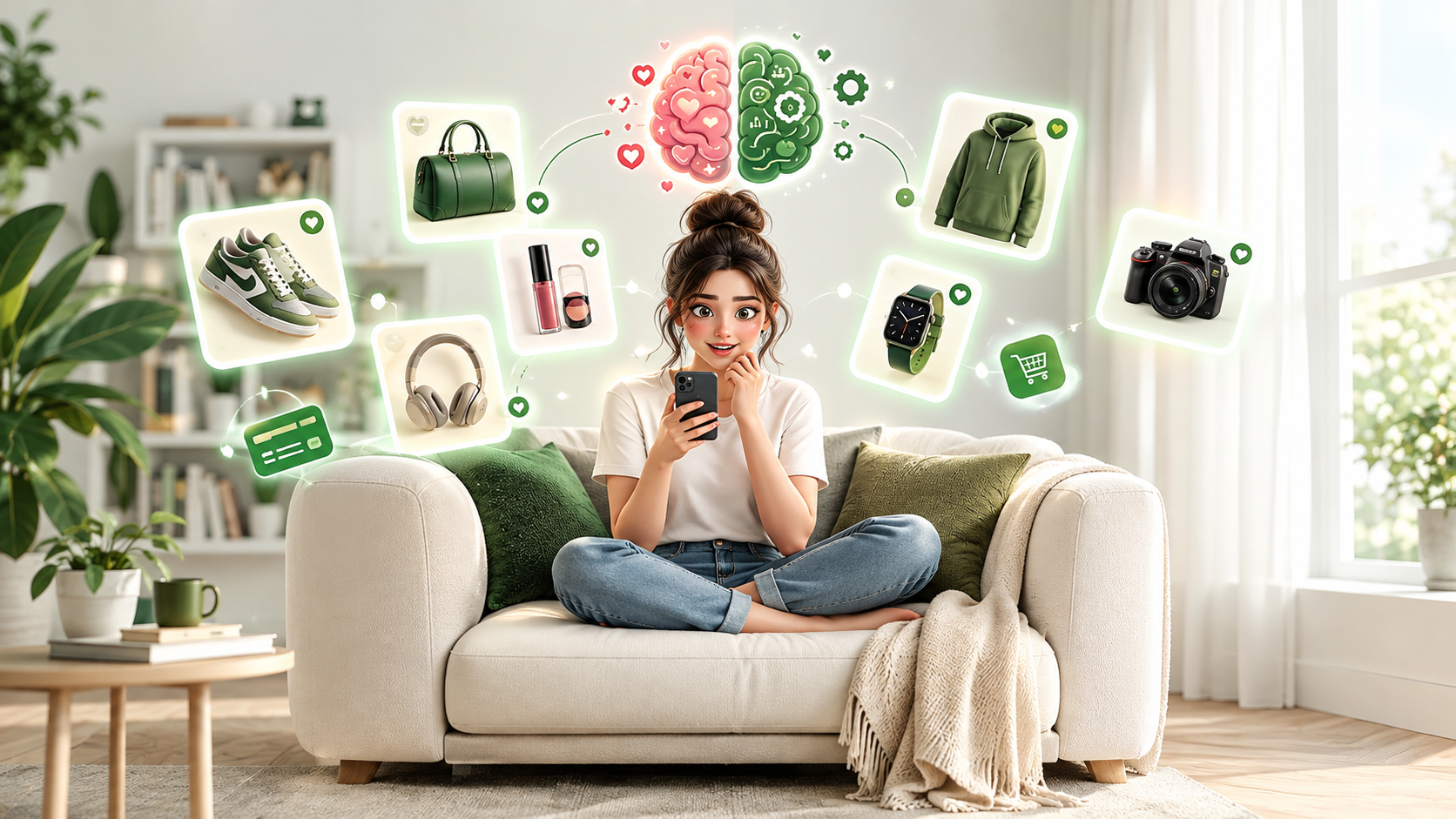
It was a Tuesday evening, somewhere around ten-thirty. The apartment was quiet, the workday had finally folded itself up, and the initial intention was completely practical: to order replacement filters for a sputtering coffee machine.
The task should have taken ninety seconds. Search, select, confirm shipping, close tab.
Twenty-five minutes later, the coffee filters were still sitting forgotten in the search bar. In their place, an artisanal Japanese cross-back linen apron in washed olive was heading toward checkout. Alongside it was a miniature cast-iron bottle opener shaped like a sea creature and a heavy ceramic incense bowl that smelled—according to forty-seven enthusiastic strangers in the review section—like ‘a rainstorm moving through a pine grove.’
None of these items had existed in the person’s conscious mind thirty minutes earlier.
There was no shortage of aprons in the kitchen drawer. Bottles were already opened with an ordinary metal tool that lived beside the silverware. Yet, in that quiet twenty-minute pocket of the evening, the purchase didn’t feel reckless. It felt like an arrival. It felt soothing. It felt entirely reasonable.
Almost everyone has stood on the other side of this experience. You set out with a crisp, logical purpose—or perhaps you open your phone simply because you are tired and the glow is easier to stare at than your own thoughts—and you emerge with a receipt for something you never planned to own.
Why does this happen? And more importantly: why does it happen even when we know, with absolute rational clarity, that we don’t need what we are holding?
What Exactly Is Impulse Buying?
Stripping away the moral judgment from spontaneous behavior
In consumer research, an impulse purchase is traditionally defined as an unplanned, sudden decision to buy, made right before the transaction occurs and characterized by a spontaneous surge of interest.
Yet clinical definitions tend to dry out what is actually a warm, kinetic human phenomenon.
Impulse buying is not simply a lapse in discipline. It is a moment where an external stimulus collides with an internal emotional appetite that was already looking for a home.
When we characterize impulse shopping as mere ‘weakness’ or ‘lack of self-control,’ we miss the entire architecture of how humans navigate the world. We do not navigate our days as cold spreadsheets tallying caloric intake and utility curves. We navigate life as meaning-seekers, feeling-seekers, and problem-solvers attempting to regulate how we feel from one hour to the next.
Key idea
Impulse buying is rarely an accident of the fingers. It is a deliberate answer from the emotional brain to an unspoken question we forgot we were asking.
— TarkWorld Editorial on Consumer Psychology
Why People Buy Things They Don’t Actually Need
The invisible forces moving beneath our everyday decisions
To understand why an unwanted purchase feels so utterly compelling in the moment, we have to look beneath the price tag and examine the psychological currents that guide human behavior.
1. Emotional Compensation and State Regulation. When psychologists observe spontaneous shopping, the most frequent companion is an altered emotional state. It might be chronic fatigue after eight hours of screen glare. It might be subtle loneliness, a lingering argument with a coworker, or even a sudden burst of celebratory elation. In behavioral science, this is often called retail therapy, but the mechanism is precise: buying something provides a momentary sensation of agency. When your day feels out of your hands, clicking ‘Confirm Order’ gives you immediate control over your immediate reality.
2. Temporal Discounting and Immediate Rewards. The human brain evolved in environments where resources were scarce and tomorrow was never guaranteed. When presented with a reward right now versus abstract savings months in the future, our neurological wiring tilts heavily toward the immediate prize. Behavioral economists call this hyperbolic discounting: we disproportionately value gratification that arrives today over stability that matures tomorrow.
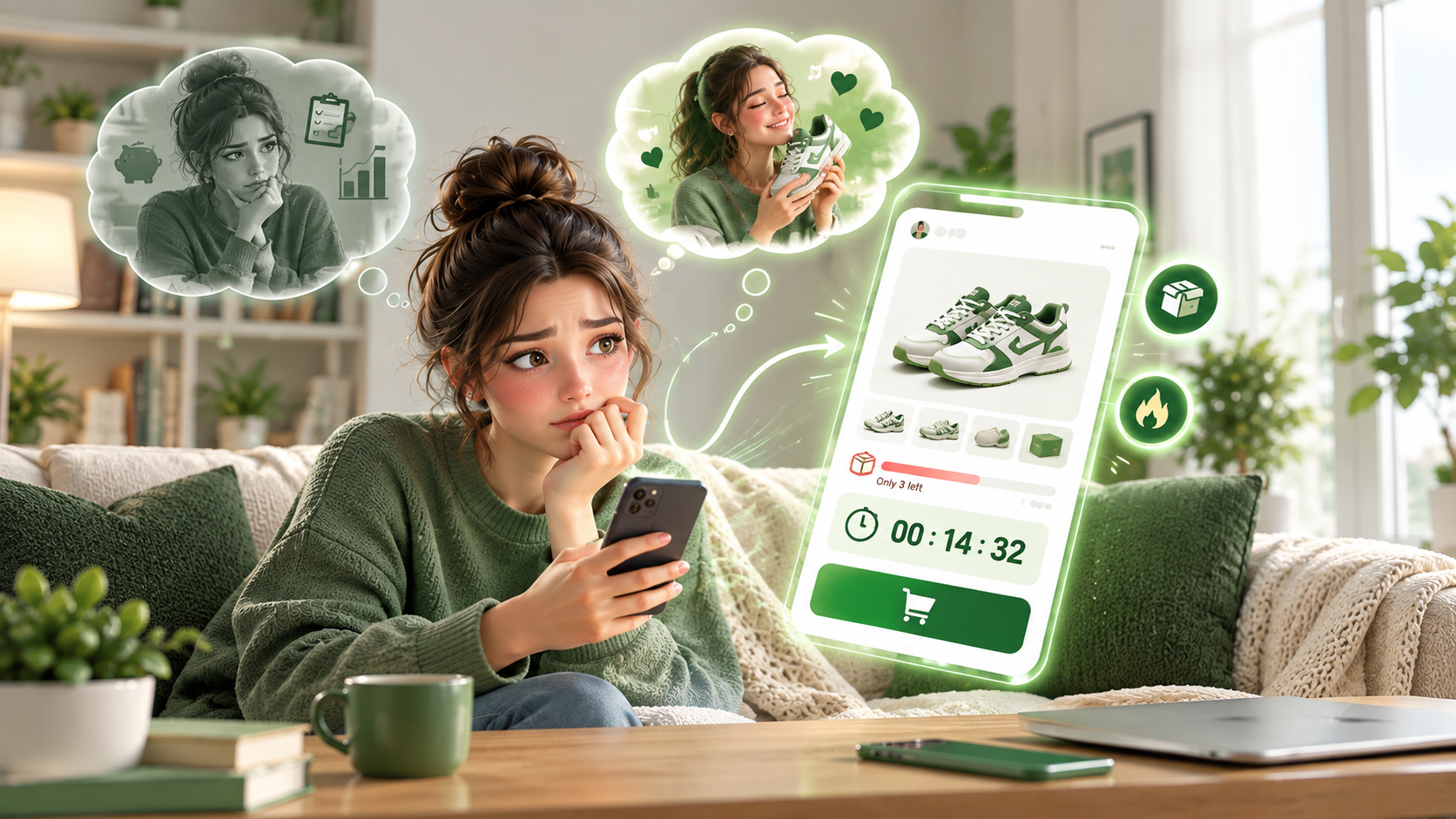
3. The Urge of Scarcity and Perceived Loss. Tell a person they can buy a particular notebook anytime over the next three years, and they will walk past it without a second glance. Tell them that only six remain in stock, handcrafted from end-of-run milled paper, and the item suddenly transforms into a fleeting treasure. This is driven by loss aversion—the well-documented human bias where the emotional sting of losing an opportunity hurts roughly twice as much as the pleasure of gaining an equivalent benefit.
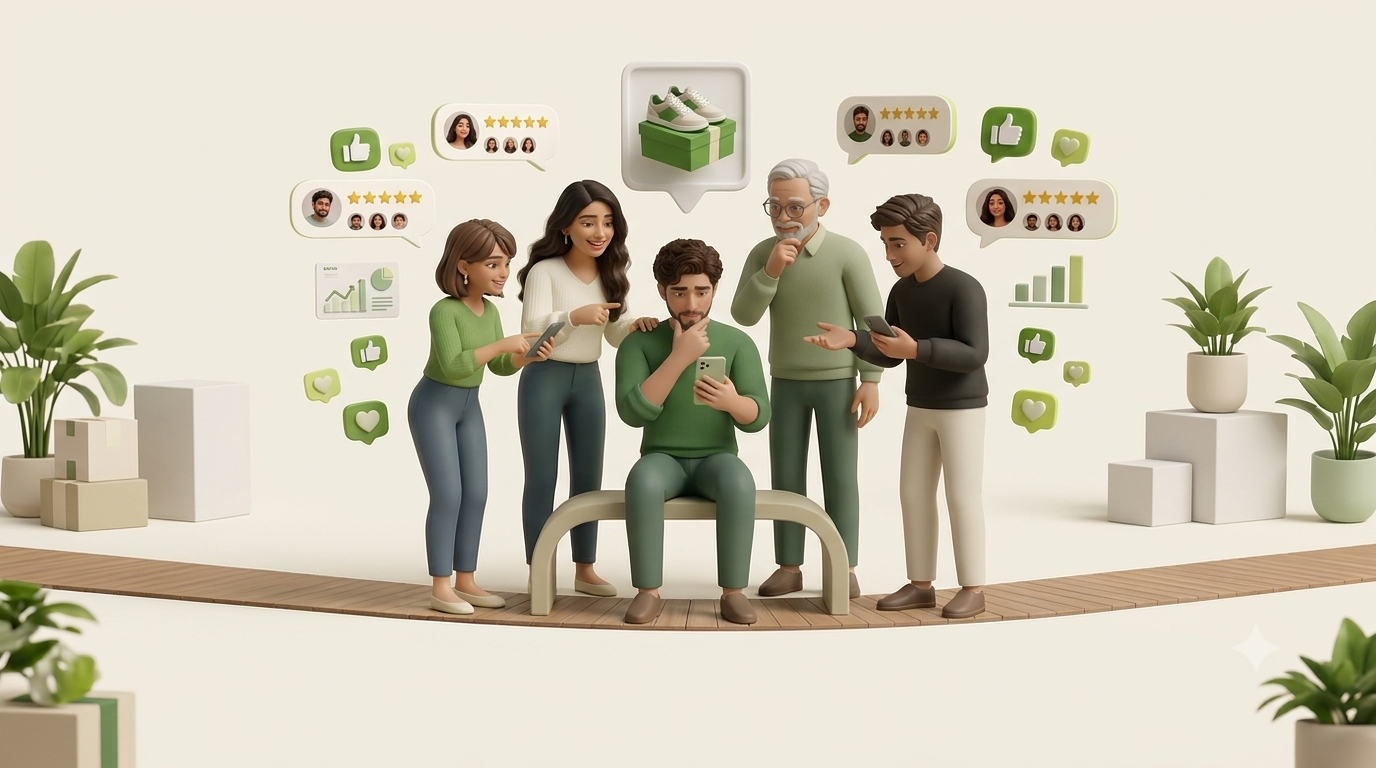
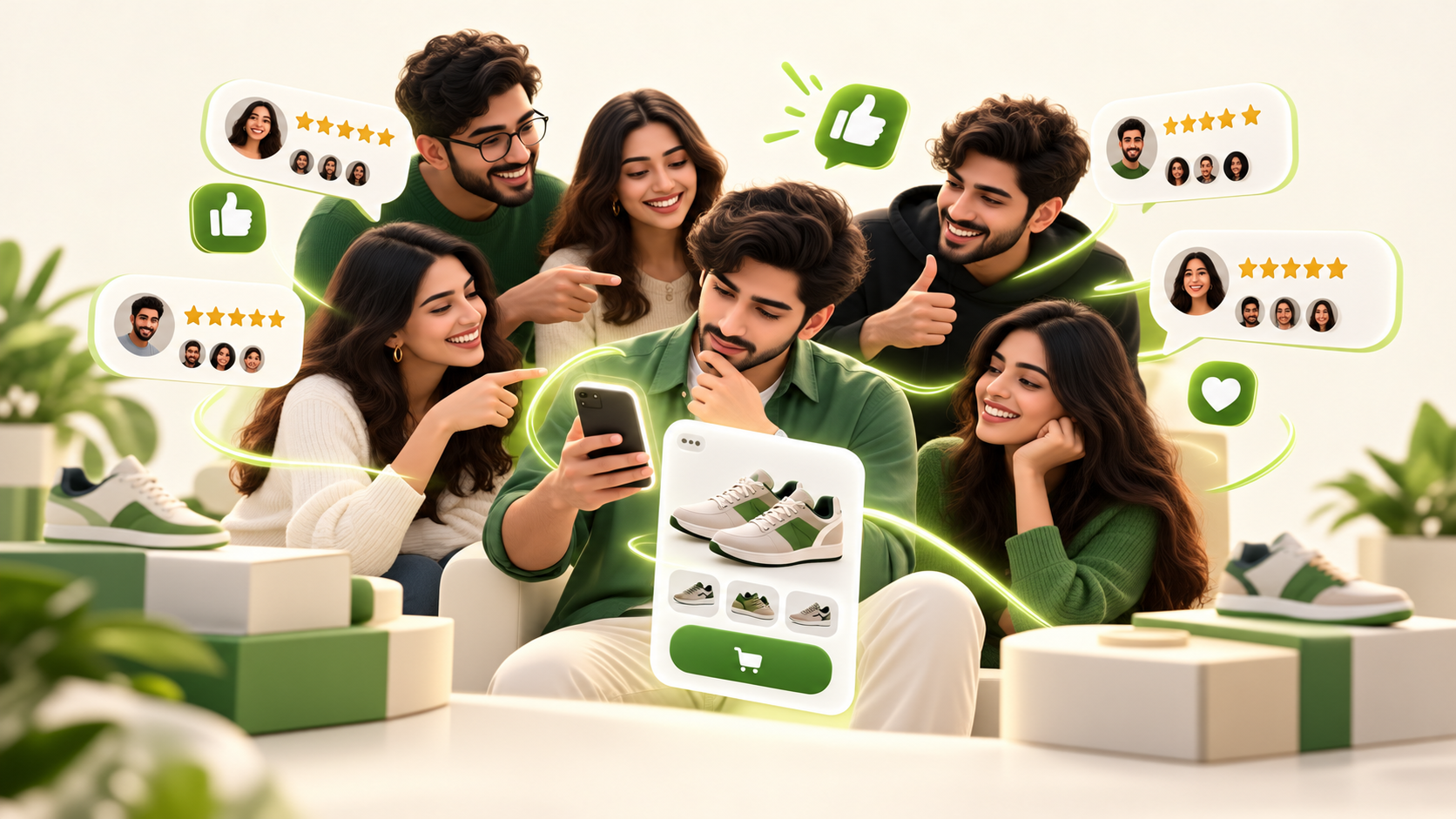
4. Social Proof as Cognitive Relief. Making decisions is mentally exhausting. Evaluating the fabric density, manufacturer integrity, and fair market price of a wool blanket requires cognitive energy. Seeing thousands of four-star ratings and photographs of strangers cozily wrapped in their living rooms eliminates that cognitive burden. Social proof whispers: ‘You do not have to calculate the risk; your tribe has already tested the water.’
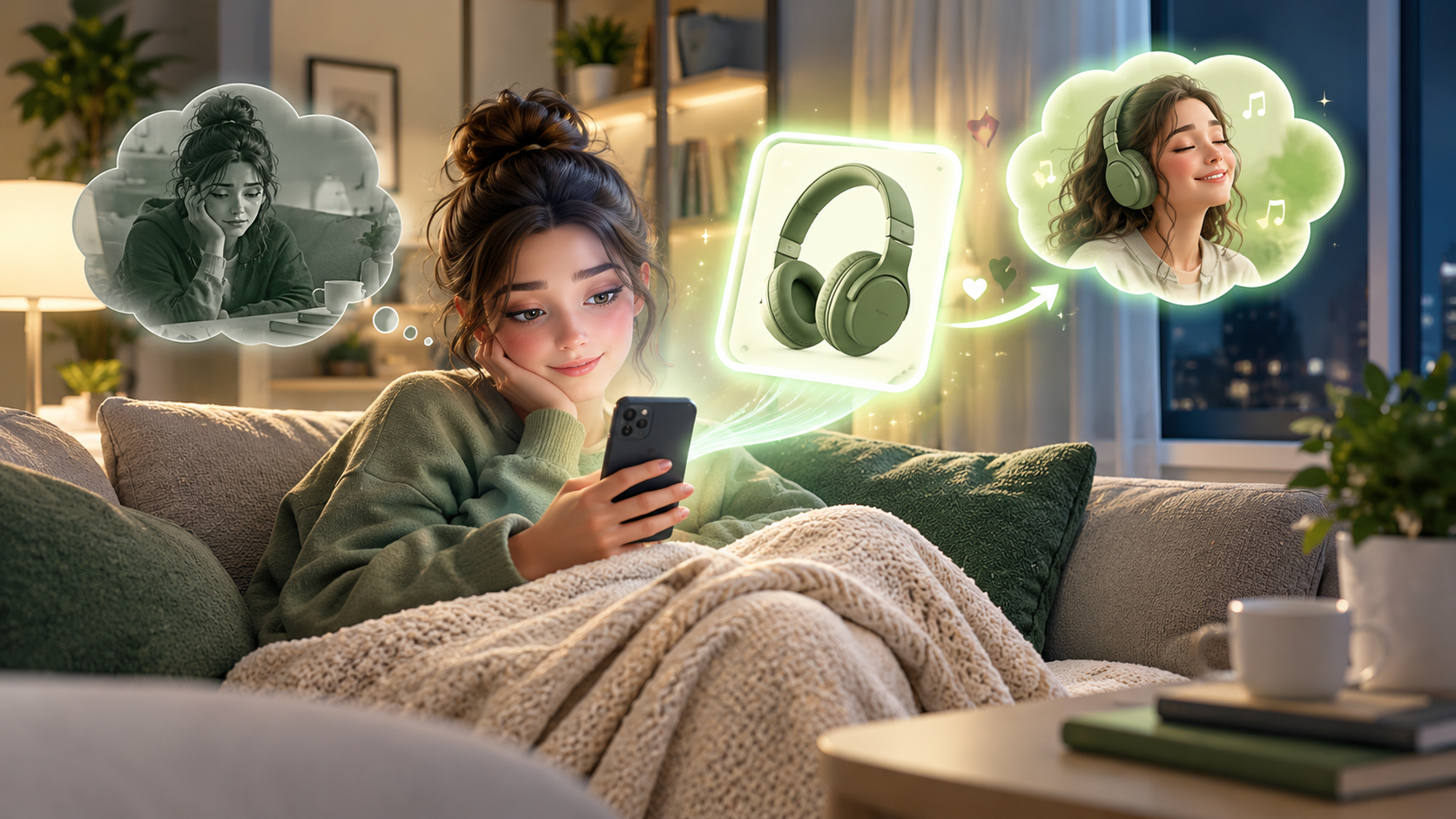
5. The Digital Environment and Algorithmic Anticipation. A decade ago, wandering through an aisle meant stumbling upon items arranged for the general public. Today, the digital space is a responsive mirror. Feeds on social platforms and recommendation engines do not simply show us random objects; they study the pacing of our thumbs, the types of aesthetic moods that hold our gaze, and the exact hour we are most vulnerable to fatigue. The product appears not as an interruption, but as an uncanny solution to a mood we hadn’t yet articulated.
6. Frictionless Checkout and the Disappearing Pain of Paying. In behavioral economics, paying with physical paper money generates a measurable psychological friction—a micro-sting known as the ‘pain of paying.’ Handing over five crisp twenty-dollar bills feels like letting go of a physical piece of your labor. Digital wallets, facial recognition, and one-click checkouts have systematically dismantled this friction. The transaction happens with the ease of a breath, separating the thrill of acquisition from the tangible reality of the expense.
Visual direction: Replace this placeholder with the final TarkWorld editorial illustration for this section. Keep the same green/lime/off-white visual language.
Identity and the Aspirational Self: Buying Who We Wish We Were
We don’t buy the object; we buy the morning we hope to live inside
Perhaps the most poignant and powerful engine of impulse buying is what psychologists call the aspirational self.
Consider the purchases that collect dust in closets across the globe: the French watercolor set, the high-end trail running shoes, the sourdough proofing basket, the dense treatise on classical philosophy.
When someone buys a pair of heavy trail running shoes on a Thursday night, they are rarely buying vulcanized rubber and breathable mesh. They are purchasing a ticket to an imagined Sunday morning—one where they wake up at dawn, leave their phone behind, and run across misty ridges as a rugged, untroubled human being.
We buy things for the person we secretly wish we were, or the person we hope to become when our current chaos settles down.
The tragedy—and the beauty—of human aspiration is that acquiring the physical artifact feels tantalizingly close to acquiring the identity itself. For ninety seconds at checkout, holding the receipt feels like you have already become that runner, that artist, that serene homemaker. The brain awards itself the badge of the habit before the first ounce of effort has been invested.
Visual direction: Replace this placeholder with the final TarkWorld editorial illustration for this section. Keep the same green/lime/off-white visual language.
Emotion vs. Logic: The War of Two Speeds
Why smart people knowingly buy things they will never use
A common misconception is that people who buy on impulse are simply gullible or uneducated. But observe lawyers, software engineers, and financial analysts: they succumb to unplanned purchases with the exact same frequency as anyone else.
This happens because human reasoning is built on two distinctly different operational speeds.
The limbic system—our emotional core—processes visual and visceral cues within fractions of a second. It responds to colors, stories, scents, memories, and perceived status almost instantly. It registers desire and floods the body with an impulse before words have formed.
The prefrontal cortex—the center of logic, budgeting, and long-range planning—operates at a much slower, more deliberate cadence. By the time your rational mind steps into the room and asks, ‘Do you really have budget for this coat?’, your emotional center has already imagined walking down a cobblestone street in autumn, feeling warm, stylish, and admired.
The prefrontal cortex does not usually overrule the emotional impulse. Instead, it does something far cleverer: it acts as a defense attorney. It drafts a logical justification for an emotional verdict that was already handed down.
‘Well,’ the rational mind tells itself, ‘it’s marked down forty percent. Technically, I’m saving eighty dollars. And my current winter jacket is looking slightly worn, so this is actually a prudent financial investment.’

Visual direction: Replace this placeholder with the final TarkWorld editorial illustration for this section. Keep the same green/lime/off-white visual language.
Why We Regret Purchases Later: The Dopamine Illusion
The sharp gap between anticipation and possession
A few days after the purchase, a cardboard box arrives on the porch. The tape is cut. The bubble wrap is pulled away. And then, almost predictably, an odd, quiet emptiness settles into the room.
The item is precisely what was ordered. It is not broken. It matches the photographs. Yet the luminous glow that surrounded it on a phone screen at 11:00 PM is nowhere to be found. Why?
Neuroscience offers a fascinating explanation. Dopamine is not the chemical of contentment; it is the chemical of anticipation. It surges in the brain when we are hunting, seeking, desiring, and imagining a reward.
The highest peak of dopamine does not occur when you actually open the box or use the product. It peaks in the delicious seconds right before you press the button, and during the hours you spend tracking the shipping updates.
Once the object is physically in your hands, the hunt has concluded. The dopamine drops back to baseline. The object returns to being what it always was: an arrangement of cotton, plastic, or ceramic sitting under ordinary kitchen fluorescent lighting.
The regret people feel after an impulse purchase is rarely about the money alone. It is the sudden confrontation with the truth: the object did not bring the emotional transformation that was promised during the hunt.
Impulse Buying vs. Compulsive Buying: A Crucial Distinction
Understanding the boundary between human spontaneity and chronic distress
Before exploring what this means for consumers and creators, it is essential to draw a clear, respectful boundary.
Impulse buying is an ordinary, ubiquitous human behavior. An impulse buy is typically sporadic, tied to a specific occasion or mood, and remains within bounds that do not ruin a household’s financial survival. You buy a sweater you didn’t budget for; you feel a little sheepish; you adjust your weekend spending; life continues.
Compulsive buying, by contrast, is a distinct psychological struggle characterized by uncontrollable, repetitive purchasing that serves as a chronic numbing mechanism for deep emotional pain, anxiety, or depression.
Those who experience compulsive buying frequently hide packages from family members, accumulate severe debt, feel intense shame during and after shopping, and find themselves trapped in a cycle where shopping is the only reliable way to alleviate unbearable internal tension.
We should never conflate healthy human spontaneity with compulsive distress. One is a natural reflection of how our emotional wiring navigates a rich material world; the other is a genuine cry for psychological support.
What Impulse Buying Teaches Digital Marketers
Why the best marketing speaks to human nature, not technical jargon
When we look at the psychology of impulse buying through an editorial lens, an unmistakable lesson emerges for anyone building a brand, designing a website, or writing copy:
People do not buy products. They buy better versions of their days, their feelings, and their identities.
Consider what happens when a digital marketer treats their audience purely as logical machines. They fill their landing pages with endless tables of technical specifications, gigabytes, stitch counts, and feature bullet points. They wonder why their conversion rates languish in the single digits.
The brands that truly connect with people understand that every touchpoint—from the warmth of a headline to the rhythm of a checkout flow—is an emotional conversation.
When a website loads instantaneously, presents a beautifully photographed scene of quiet order, and offers reassuring testimonials from authentic customers, it is doing far more than making a sales pitch. It is reducing cognitive strain. It is offering an oasis of clarity in an overwhelming, fragmented digital world.
Visual direction: Replace this placeholder with the final TarkWorld editorial illustration for this section. Keep the same green/lime/off-white visual language.
The Ethical Red Line: Psychology vs. Manipulation
Building a brand that can look its customers in the eye next year
Understanding consumer psychology is a potent capability. And like any capability that touches human vulnerability, it carries an immediate ethical responsibility.
There is an enormous, vital difference between understanding human behavior to serve customers cleanly, and exploiting cognitive biases to fleece them.
Genuine scarcity is when a ceramicist actually makes only forty mugs in a kiln firing and transparently lets buyers know when they are gone. Fake scarcity is a website running a countdown timer that resets to ’00:14:59′ every single time you refresh the page.
Frictionless checkout is giving a customer a clean, respectful interface with clear pricing and zero unexpected shipping markups. Dark patterns are stealthily pre-checking recurring subscription boxes, burying cancellation policies in sixteen-point grey text, or creating countdown timers that play on primal fears of missing out.
Manipulative tactics can certainly generate an artificial spike in short-term conversions. But they come with a brutal hidden cost: customer resentment, sky-high refund rates, and the slow, irreversible death of brand reputation.
In digital marketing, the only metric that compounds over decades is trust. If an impulse purchase leaves a customer feeling deceived, tricked, or foolish twenty-four hours later, the marketer hasn’t won a customer—they have earned an adversary.
The TarkWorld Principle of Respectful Commerce
If a business can only make a sale by deliberately disorienting a customer’s rational faculties, that business does not possess a value proposition. It possesses a confidence trick.
Ethical marketing empowers the customer’s agency; manipulative marketing preys upon their fatigue.
Practical Lessons for Ethical Marketers
How to apply consumer psychology without sacrificing your soul
If you are a writer, founder, or marketer, how do you take these profound insights about human nature and apply them responsibly?
1. Speak directly to the desired state of mind. Stop obsessing over what the product is made of until you have clearly honored what the customer wants to experience. If you sell noise-canceling headphones, you are not selling 40mm neodymium drivers; you are selling the ability to do deep, undisturbed creative work in a noisy world.
2. Remove unnecessary friction, but preserve customer clarity. Make your checkout effortless, clean, and legible. But never hide costs. When a customer feels respected throughout the checkout experience, the ease of the process feels like considerate hospitality rather than a trap.
3. Optimize for post-purchase pride, not just pre-purchase adrenaline. What happens after the customer buys? Do they receive a warm, thoughtful confirmation note that affirms their decision? Do they receive a product that meets or exceeds the photographs? When you engineer the post-purchase experience with care, you replace buyer’s remorse with genuine relief and lasting loyalty.
A Tale of Two Ads: The Power of Framing
Comparing two approaches to marketing the exact same product
To see how human psychology operates in marketing practice, observe how two different brands might write an advertisement for the exact same physical product: a premium, unlined hardcover notebook made from heavyweight linen.
Visual direction: Replace this placeholder with the final TarkWorld editorial illustration for this section. Keep the same green/lime/off-white visual language.
Advertisement A
‘FLASH SALE! 50% OFF FOR THE NEXT 2 HOURS ONLY! Premium 120GSM Notebook with 192 Pages, Hardcover Binding, Dual Ribbon Bookmarks. Only 4 Left In Stock! BUY NOW BEFORE PRICES DOUBLE!’
Advertisement B
‘A quiet place for your thoughts before the day gets noisy. Bound in natural linen with heavy, ink-proof paper that lays completely flat on your morning table. Slow down, close the laptop, and give your best ideas room to breathe. Handcrafted in limited seasonal batches.’
How to Protect Yourself: The 72-Hour Sanity Check
A simple mental pause button for the modern digital consumer
If you find yourself on the consumer side of the equation—hovering over an unplanned purchase with your thumb hovering over Apple Pay—how can you tell if you are responding to genuine value or an emotional mirage?
Here is a simple, battle-tested three-question framework:
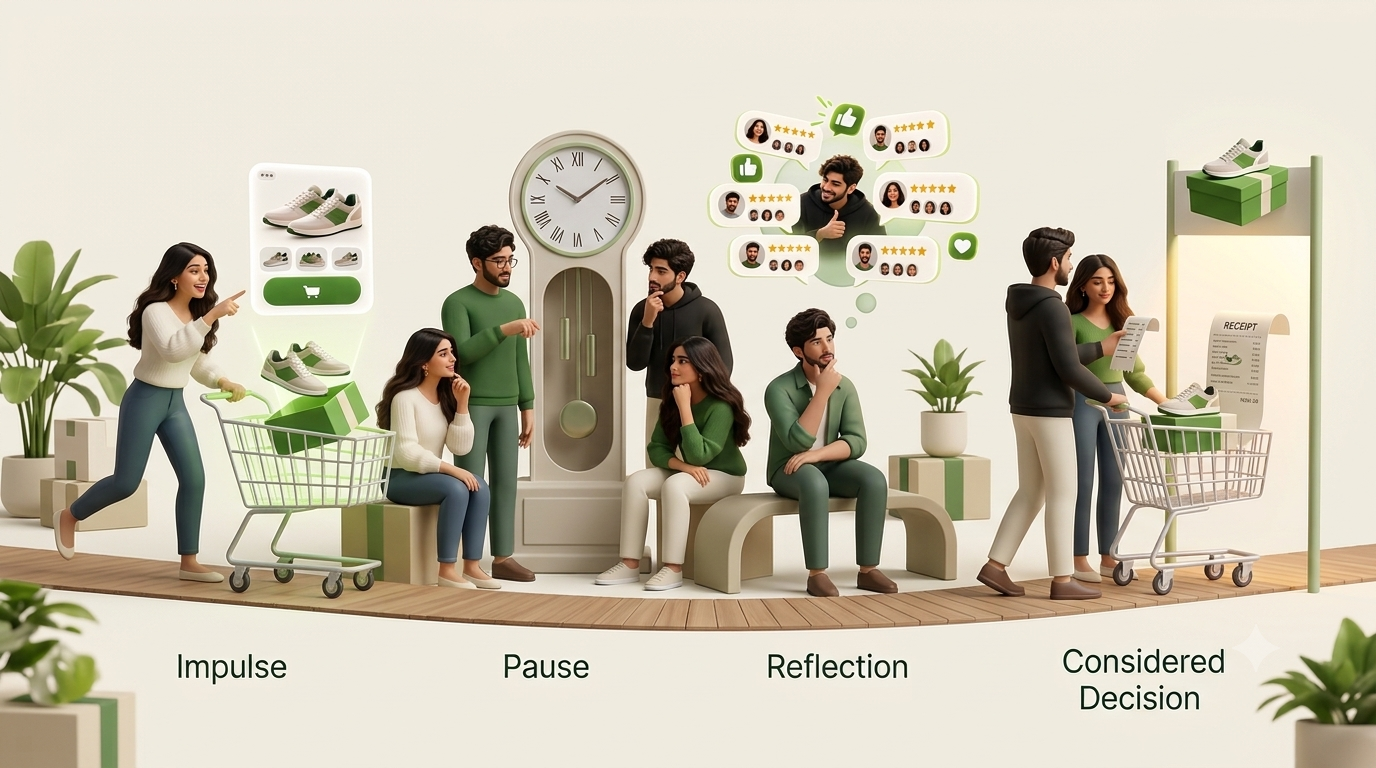
1. The Emotion Check: ‘What feeling am I hoping this purchase will solve?’ Ask yourself whether you are actually excited about the object, or whether you are simply bored, lonely, exhausted, or seeking a quick hit of validation. If you are tired, a hot bath or a walk will do more for your nervous system than a package arriving on Thursday.
2. The Cold Cash Test: ‘If someone stood before me right now and offered me either this item or its exact dollar amount in crisp paper cash, which would I take?’ If you would rather have the eighty dollars in cash, you don’t actually want the item. You are just intoxicated by the shopping experience.
3. The 72-Hour Rule: Add the item to your wishlist, close the browser window, and set an alarm for three days from now. In over eighty percent of cases, by Sunday morning the fever will have broken. If after seventy-two hours the desire remains steady, thoughtful, and financially sound, you can proceed with confidence, free of regret.
Visual direction: Replace this placeholder with the final TarkWorld editorial illustration for this section. Keep the same green/lime/off-white visual language.
HUMAN INSIGHT
The core question hiding behind every spontaneous click
When people stand at the threshold of a purchase, they rarely pause to conduct an honest inventory of physical necessity.
They almost never ask: ‘Do I objectively need this object to survive and flourish?’
Instead, the mind asks a far more immediate, visceral, and emotional question: ‘How do I feel about having this in my life right now?’
We do not buy goods to decorate our shelves. We buy goods to alter our internal climate. The moment we recognize this truth, both our spending habits and our marketing strategies transform from mindless impulse into profound human empathy.
HUMAN INSIGHT
People rarely ask: ‘Do I need this?’ The more immediate, visceral question is: ‘How do I feel about having this right now?’
Recognizing this difference separates superficial salesmanship from lasting, resonant consumer connection.
The Bigger Lesson: What Shopping Reveals About Being Human
Zooming out from the checkout cart to the architecture of desire
If we zoom out from the digital storefronts, the cardboard shipping boxes, and the algorithmic ads, impulse buying reveals something touching and vulnerable about human nature.
We are restless creatures. We carry an innate longing to refresh our lives, to experience novelty, and to close the quiet distance between the imperfect reality of our current Tuesday and the luminous promise of tomorrow.
Every unplanned purchase is a tiny, imperfect monument to optimism. It is an expression of hope that a new tool, a new garment, or a new journal might help us live with a bit more grace, beauty, or ease.
There is no shame in having that desire. It is part of the human pulse.
The wisdom lies in recognizing that while an object can be a wonderful companion to a well-lived life, the transformation we seek never arrives inside a cardboard box. The calm, the creativity, and the self-worth we long for are built slowly, through attention, discipline, and authentic connection—none of which can be ordered with next-day shipping.
A Final Thought for Writers, Marketers, and Seekers
Honoring the fragile beauty of human decision-making
The next time you find yourself scrolling late at night, your gaze arrested by something you never knew existed, treat yourself with curiosity rather than contempt. Notice the emotion rippling beneath your ribcage. Ask what your heart is actually searching for in the glow of the screen.
And if you are a marketer, a creator, or a storyteller, remember whose world you are stepping into.
Treat your audience’s attention as sacred ground. Do not manipulate their late-night vulnerabilities. Do not manufacture artificial panic to squeeze a temporary conversion from their exhaustion.
Build things of genuine integrity. Speak to the deepest, most thoughtful part of their intelligence. When you respect the human behind the click, you create something far more durable than a momentary impulse: you build a relationship that endures.
Frequently Asked Questions
Is impulse buying always bad?
No. Occasional unplanned purchases are common. The important question is whether the behavior is frequent, difficult to control, or creating meaningful problems.
Why does scarcity make products feel more valuable?
Limited availability can add urgency and make the possibility of missing an opportunity more salient. The effect depends on context and the individual.
Does social proof influence buying?
Reviews, ratings and other customers’ experiences can reduce uncertainty and provide useful information when someone is deciding what to buy.
What can marketers learn from impulse buying?
People respond to more than features. Clear positioning, relevant emotion, trustworthy evidence and a low-friction experience can all shape how a product is perceived.
How can I avoid unnecessary impulse purchases?
Pause the decision, identify the feeling behind the purchase, compare the item with your longer-term goals, and give yourself time when the purchase is not urgent.
Understand people. Build better marketing.
TarkWorld explores the psychology behind attention, trust, decisions and digital behavior—so marketing becomes more human, not more manipulative.